How to avoid losing money and time on transporting belongings, pets, and essential papers.
How to transport bulky cargo to Spain? What to do with pets when relocating? How to avoid high costs when moving belongings to Spain? We will discuss logistics in this article.
Many know how difficult it is to move to a new house or apartment, especially if the new home is in a different part of the city. But moving to another country is a whole different level of complexity. New laws, rules, and prices come into play. It’s clear that you won’t be able to transport all your belongings in one go with just suitcases. Therefore, you need to think about transporting what you need in advance to avoid unpleasant situations.
We will share a personal example from ReloSpain founder Dmitry:
"When we moved to Spain, we transported all the necessary everyday items in suitcases. Moving as a large family is much more convenient, as you can take more things without exceeding the limit per person. The rest we sent in bags and boxes via a transport company from Moscow. At that time, we were living in Tenerife. To deliver the cargo to the island, we had to use a ferry. From the island, we transported our belongings in a minivan, but we could also have used a cargo van or sent a car with a driver. We had a lot of things, but we didn’t encounter any major difficulties — we were lucky to find a good transport company in Spain.
In general, it’s very important to carefully choose a logistics company. Your valuable cargo is at stake, and if something goes wrong, the cost of loss will be high. Therefore, to make your search easier, we created a separate list of the best logistics companies with prices per kilogram of cargo in Spain — with links to resources. Even though we have been living in Spain for over two years, we still have items that we plan to transport.
When we were moving, we weren’t sure if we needed photo albums, dishes, and other everyday items. At that time, they didn’t seem like a priority. Now we understand: these things create comfort and a sense of home, as home is a place where you feel comfortable with your favorite things around you. Whether it’s a mug, a teddy bear, or a pillow — all of this creates that atmosphere of something familiar, close, and everyday.
Here’s a little life hack: take photos of all the items you plan to transport after moving to Spain, indicate where they are, pack the items in boxes, and label them. This will help whoever is assisting you with the move to immediately understand where everything is.
Make a complete list of items: by the number of copies. It’s better to take care of this in advance. Before packing your belongings, consider whether it’s worth transporting them at all, as many of them can be easily found and purchased in Spain, often cheaper than their original cost. After all, moving is not just about money, but also about your precious time."
If you have a residence permit in Spain and you are arranging the move as a transfer of residence, you are entitled to full exemption from customs duties and VAT on used personal belongings and household appliances. To do this:
A customs declaration for exemption from duties must be completed: you need to confirm your residence permit, provide a list of items, and present a consular confirmation of the change of residence. If the conditions are NOT met, duties and VAT at the general rate will be charged on the entire cargo. Also important: if you are transporting items in a single copy by land, in your own car, there will be no questions at customs. But if there are multiple copies, for example, 2 cameras, 4 cigarette cases, and so on, customs will take an interest in you. You will need to prove that these are your personal belongings and not some kind of contraband.
Additionally, if you are transporting items in your own car, there are often situations where migrants are on the highways, looking at the car brand and license plates to identify relocators, and if they find a suitable option, they may set up traps on the road, for example, stop you and say that a tire is flat or something like that — you need to be very careful, do not get out of the car, do not stop for calls, always lock the doors when getting out — and then you, your family, and valuable belongings will be safe.
The first option – Air cargo, air logistics — a reliable but expensive way to transport: from 7 to 12 euros per kilogram including express delivery. If the cargo weighs 100 kg, be prepared to pay around 350-500 euros. In terms of timing – usually 5-10 days in transit.
The second option — Road transport. This method allows you to deliver items to a specific address and go through customs there. Cargo trucks specially equipped for these purposes are used for transportation. Timing — from 5 to 30 days depending on the route and volume. This method is cheaper than air transport, but waiting for the cargo can take longer.
One of the most popular methods in Spain — is sea transport. An economical option for large shipments that are difficult to deliver by other means. Regular shipping routes are used, with the main arrival ports being Vigo and Bilbao. The average delivery time is 22 days. For small parcels, there is an option to form consolidated cargo — a container is filled with items from different owners, and payment is made proportionally to the volume in m³.
By sea, it is often not possible to transport cargo directly to the residence, so additional road transport will be required. If the cargo is small, up to 30 kg, it can be sent by mail from Russia to Spain via "Russian Post". Other companies, such as CDEK, do not transport goods from Russia to Europe.
There are no major difficulties in this. We have had several cases where clients moved with pets without any problems. But there are mandatory rules without which such transportation is impossible. We will explain in order:
The first thing to consider is the official list of Spanish cities (airports) where you can enter with pets from non-EU countries. We have also attached this list below the video. Be sure to study it if you plan to move with pets. The pet must be at least 15 weeks old, have a rabies vaccination, and an antibody test, which is done at least 30 days after vaccination and at most 3 months before the trip.
Upon arrival at the airport in an EU country, you will need to go through sanitary control. If you are flying with a layover but do not leave the transfer zone, you will need to go through control in Spain. You must have a veterinary passport, a certificate in Spanish format signed by a veterinarian, and a translation into Spanish — a sample in Spanish and English can be downloaded.
Important — the pet must be microchipped. This is a standard rule for all: animals must be marked with a microchip of European standard. The microchip must be implanted before vaccination.
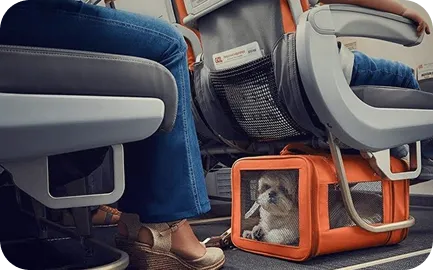
The most common way is to fly with you in a carrier. The pet can fly either in the cabin if its weight with the carrier is up to 8 kg — the standard for most airlines, or in the cargo hold in a special carrier. Usually, this compartment is used for large dogs.
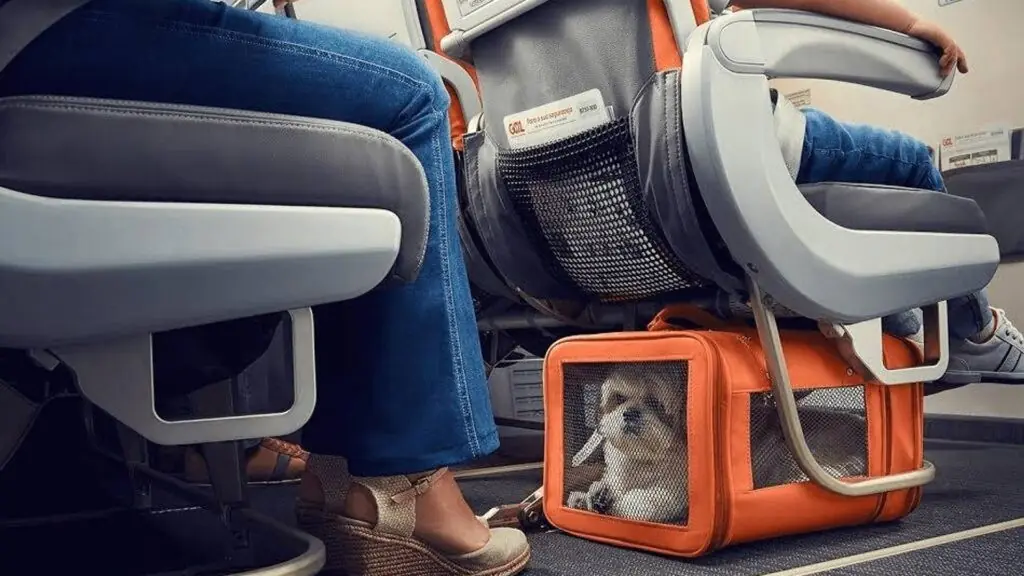
Owners recommend booking a "spot" for the pet immediately after purchasing the ticket, as there is a fairly strict limit on animals in the cabin.
The second option — transportation by land, by car through Europe or through international carriers. This method is popular among families with multiple pets and to prevent extra stress, although it takes much longer. Here’s how it works: you book a flight to Germany, France, Poland, or Finland — and then drive to Spain.
You can use the services of international transport companies, such as Pet Relocation or DierTaxi — they transport animals from anywhere in Europe to an address in Spain in a more comfortable environment, with stops, video monitoring, and even audio support.


You can use a ferry. On a car ferry, there are enclosures provided for animals, separate cabins, or you can simply stay in the car. This is convenient if you are transporting several animals, large dogs, or a lot of belongings. The document requirements are the same as for air travel: chip, vaccinations, passport or certificate. In Spain, you can bring up to 5 animals per owner without commercial movement status.
Currently, flying to Spain from Russia is not so easy: there are no direct flights, only with layovers. Therefore, it is important to ensure in advance that your pet will be comfortable during the flight. If your journey includes several layovers, it is better to contact specialized companies. This will help minimize stress for the animal and ensure better conditions.
Here are a few options:
You can use a sea container — a classic delivery option. The car is placed in a 20-foot or 40-foot container and delivered on a cargo ship.
Another option — also by sea, but on a ferry. When the car drives onto the ship, it is secured and delivered. This method is often used for large vehicles.

The third option — use a car carrier. These are international auto-evacuators that can transport cars with closed or open bodies through the Baltics, Poland, Germany, and to Spain.
A customs declaration is also required, either independently or through logistics, for the entire duration of the export procedure. Transit numbers and an international Green Card (insurance for driving in Europe) are also needed. For registration after transportation, you may need a certificate of compliance with environmental standards.
If you do not meet one of the conditions for duty-free transportation that I mentioned earlier, you will have to pay a customs duty of 10% of the customs value of the car. You will also need to pay VAT of 21% on the amount of the car. And a registration tax: up to 16%.
Another important point: with Russian license plates, the car can stay in Spain for no more than six months, especially if you have a residence permit. After that, it must be registered and customs cleared. Also, keep in mind that such a car may not be accepted at a service center or may be refused service.
Therefore, it is worth carefully calculating all expenses. It may be more cost-effective to buy a new car than to transport your vehicle: here in Spain, you can buy a good new car from foreign manufacturers even cheaper than in Russia. Bulky personal belongings and electronics are most often transported to Spain by sea containers, road transport, or air — through international logistics companies. The optimal transportation time for all belongings: six months. During this time, you will not be considered a tax resident of Spain, so you are not required to report your assets.
Submission through us. We often help clients move to Spain. We know all the nuances of this process: how much everything costs, where you can save, and where it’s better not to take risks, which companies are trustworthy, and of course, we have many real stories from people who moved with our help. We can fully calculate your moving expenses, taking into account the residence permit processing, and create an optimal roadmap to make it clearer for you.
The most important thing for us is to talk to each client, understand their needs, and find the best solution. For example, one person may not need to transport many different items. Another may require the transportation of large cargo. In such cases, the moving strategy will differ. Therefore, if you have any questions about your move that you can't resolve — come for a free consultation, and we will sort everything out and create a detailed personal plan.
Strictly necessary
Required for the site to function
These cookies are essential for the website to work and cannot be disabled. They remember your language preference and your cookie decision so the banner doesn’t reappear
Analytics & performance
Anonymous visit counting
Let us count visits and traffic sources (search, social, direct) to understand page popularity and improve the site. No personal data is collected
Your rights
You can change or withdraw your consent at any time by clicking «Manage cookies» in the site footer. This is as easy as giving consent. You also have the right to access, correct, or delete your data by contacting us at hello@relospain.com