We analyze the current requirements, proof of remote work, taxes, and common mistakes when applying for the Digital Nomad in Spain.
Who can obtain it, what documents are needed, and how to get approval on the first application within 20-30 days?
This can be done right now along with the Digital Nomad residence permit. In this article, we will thoroughly discuss this type of residency: why it is most often approved, how not to get confused by the conditions, what income you need for your residence permit to be approved, what taxes exist for digital nomads, and why it can be processed in the shortest possible time.
In this article, everything you need to know to get 100% approval for this residence permit on the first application: who definitely qualifies for the Digital Nomad, what is checked, where refusals are most common, and how to reach the resident card in 20-30 working days. All through the lens of our experience working with our clients, who have already had over 2000 approved applications for residence permits with our help. We will also provide examples of stories from those who have already received their cards with our assistance, moved, and are living in Spain.
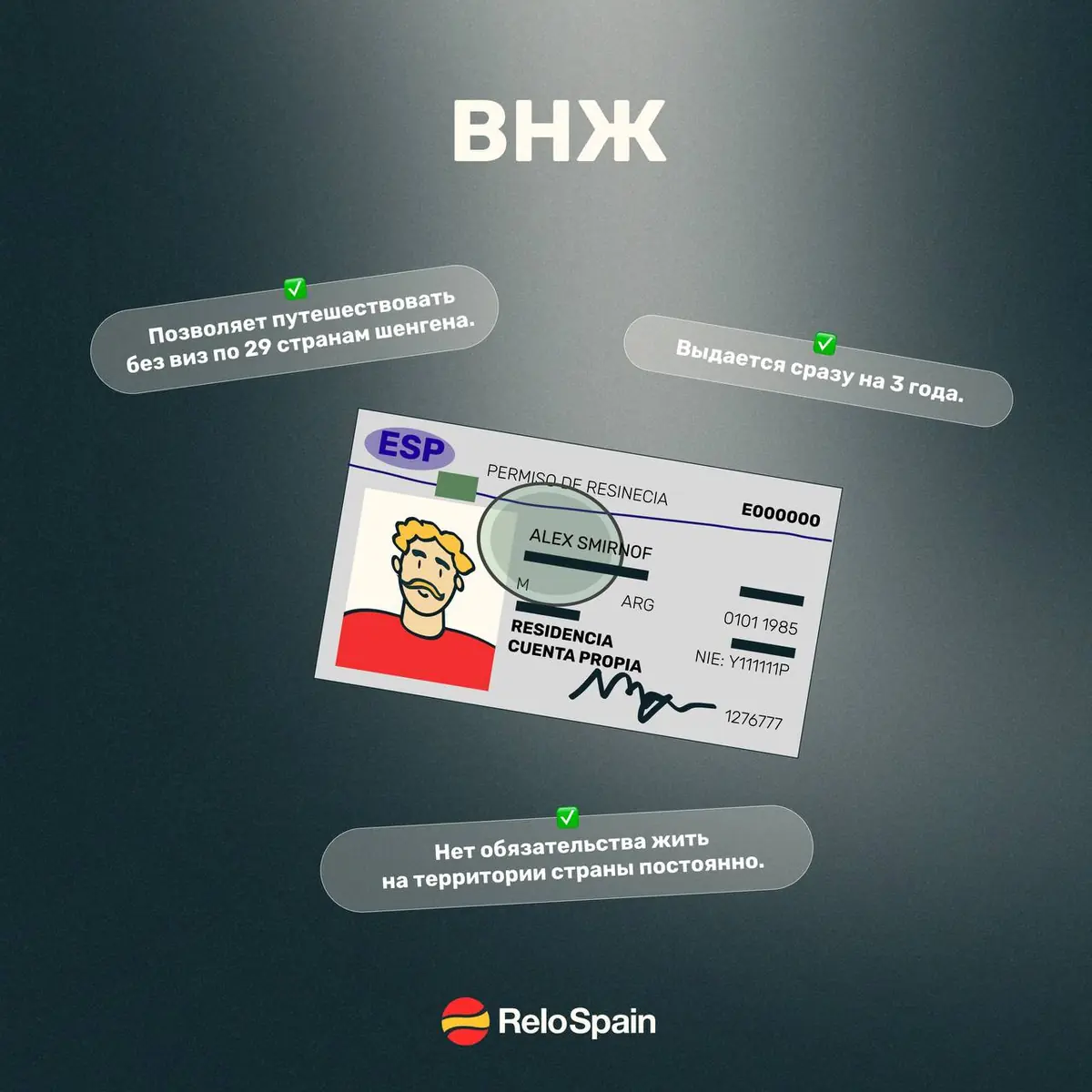
The Digital Nomad residence permit, or another name — the digital nomad visa — is the best option for remote workers or freelancers, and here’s why:
Let’s take a closer look at the conditions required to obtain this type of residence permit. You can obtain the Digital Nomad residence permit if you:
It is important to note: You must not only prepare the documents but also get them apostilled (especially the diploma, criminal record certificate, and insurance). The application for the digital nomad visa in 2026 must be submitted in person either at the nearest Spanish consulate or within Spain (while on another visa). To confirm your income, bank statements, employment contracts, letters from clients, and tax returns will suffice. And yes, you can invite your family right away, provided you meet the income and document requirements.
If any of the above does not apply to you, there’s no need to be upset: we have many cases where we found solutions for missing requirements for the Digital Nomad residence permit during consultations and ultimately obtained approval for our clients. Therefore, we recommend coming in and discussing any difficulties with us during a consultation.
In the first option, you must provide an employment contract with a company that has been operating for more than 1 year and where you have been working for more than 3 months. You also need to show a statement that this company pays you a salary. If you do not have such a contract and are registered as self-employed or an entrepreneur, then your option is Nomad-autonomo. In that case, you will need to provide:
Here’s a small reminder:
We hope it is now clear to you what the differences are between a Nomad in employment and a Nomad autonomo. To summarize, Digital Nomad is for those who are employed and have an official contract, while Autonomo is for those who are self-employed or freelancers.
Let’s go through the numbers. The minimum income amount:
You can officially confirm your income by providing a history of deposits from the bank and an employment contract. Or partially — by showing income along with a bank statement of available funds in the account. But what to do if you fall short on income? Well, first you need to understand how much you are lacking. If your official income is less than €2849, it can be compensated with savings, but only up to 15%, or you can apply through your spouse if their income meets the requirements.
If none of the points apply to you, the best solution is to meet with our relocation expert. We will analyze your case: find the reason why you cannot confirm your income and suggest all possible solutions. The link is at the end of the article.
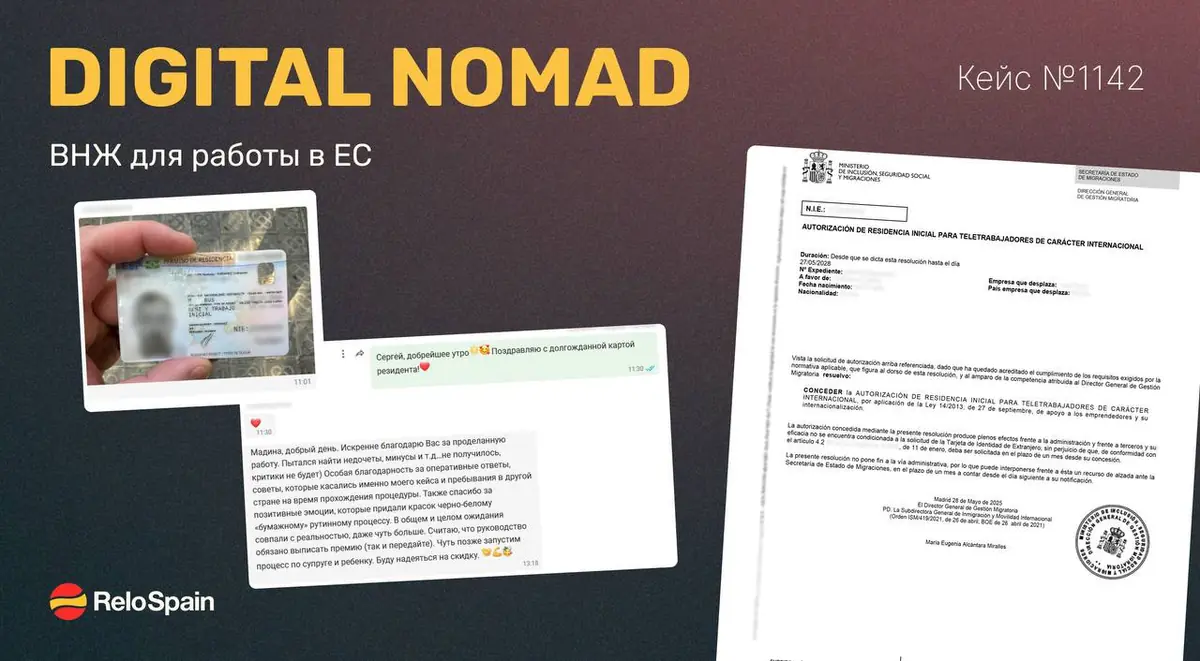
We had a client, Sergey, an experienced IT specialist who received a remote job offer in the Czech Republic. However, he needed a work visa, which was unavailable to Russian citizens. We suggested the Digital Nomad residence permit, which would allow him to work for a European company and travel within the Schengen zone. Sergey was thrilled, as he dreamed of traveling around Europe. We helped him prepare all the documents, confirm his income, and successfully submitted the application, receiving approval in 17 days. Now Sergey works from Spain and occasionally visits the Czech Republic.
We can also create a personalized plan for you to obtain the Digital Nomad residence permit. We do this during our free strategic sessions, which you can access by clicking the button below.
Let’s figure it out. Under what conditions you do not need to pay tax contributions while holding a Digital Nomad residence permit:
You can confirm tax residency in another country (Certificate of Tax Residence). Agreements to avoid double taxation have been concluded between Spain and 93 countries, including Russia. Alternatively, you can simply avoid Spanish sources of income (not working on Spanish territory, even if the employer is abroad). In all other cases, you become a tax resident and must pay income tax.
For employed digital nomads, there is a special tax regime in such cases — the Beckham Law. It is named after the famous football player — David Beckham. Before his transfer to Real Madrid, a Royal Decree was adopted in Spain introducing a fixed tax rate of 24% for foreign citizens. Now, a similar regime operates for digital nomads.
Under the Beckham regime, you receive a fixed tax rate of — 24% on the first €600,000 of income per year instead of 47%. This applies for 6 years. Additionally, you do not pay taxes on income earned outside of Spain if you do not transfer it to the country.
However, this regime is not suitable for everyone. More details can be found in the article dedicated to taxes.
As an Autonomo, you need to pay:
Be careful with taxes for Digital Nomads — otherwise, you could find yourself in an unpleasant situation.
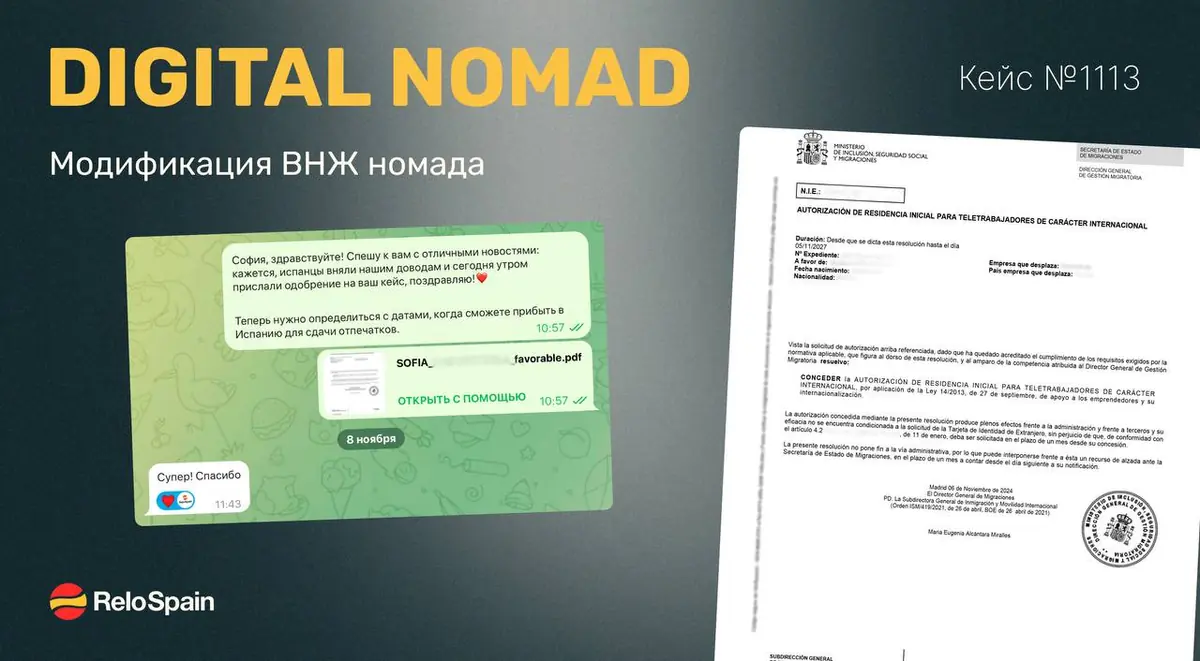
A few months ago, we were approached by Sofia, who obtained a Digital Nomad residence permit in Spain in 2024 to unlock her assets. The service she worked with did not warn her about the need to open a self-employed status, pay social contributions, and tax on worldwide income. After discovering this, she wanted to change her status, but other agencies claimed it was impossible. She did not give up: she visited various agencies and lawyers, and eventually found us.
We suggested modifying her residence permit in Spain, selected a suitable type of residency without social contributions and taxes, submitted the documents on September 24, and received approval on November 6.
Here’s the current list of documents for 2026:
🔻Scan of passports of all applicants (all pages, even blank ones)
🔻Criminal record certificates with apostille for all adult applicants (+ sworn translation)
🔻Contract with employer/client company (+ sworn translation)
🔻Extract from the Unified State Register of Legal Entities/Individual Entrepreneurs/in corporation (apostille and sworn translation)
🔻Bank statement for the last three months, confirming payments under the contract + invoices
🔻Certificate of departure/A1 (for employed nomads, sworn translation)
🔻Copy of diploma, if relevant to the service/position in the contract (apostille and sworn translation)
🔻Letter from the company/clients about the possibility of remote work
🔻Commitment to register as self-employed/register with social security (if applicable)
🔻Scan of passports of all applicants (all pages, even blank ones)
🔻Criminal record certificates with apostille for all adult applicants (+ sworn translation)
🔻Copy of diploma, if relevant to the service/position in the contract (apostille and sworn translation)
🔻Scan of passports of all applicants (all pages, even blank ones)
🔻Copy of diploma, if relevant to the service/position in the contract (apostille and sworn translation)
Special cases (if there is a family):
🔻Marriage certificate with apostille
🔻Birth certificate with apostille (for each child)
🔻Consent from the biological parent for departure, long-term residence, and obtaining a residence permit for the child
Do not forget about the phenomenon of additional requests. Frequent additional requests are the current reality for digital nomads. We have learned to work with additional requests, and now our approval statistics after additional requests stand at 100%. We compile a personal list of documents during a strategic session with an expert, which you can sign up for by clicking the button below.
Here’s a small reminder on how to obtain a residence permit without additional requests when applying independently:
It is important: meeting all requirements does not guarantee approval, as regulations often change without official announcement. We have had cases where we received “unexpected additional requests,” even though we followed the regulations.
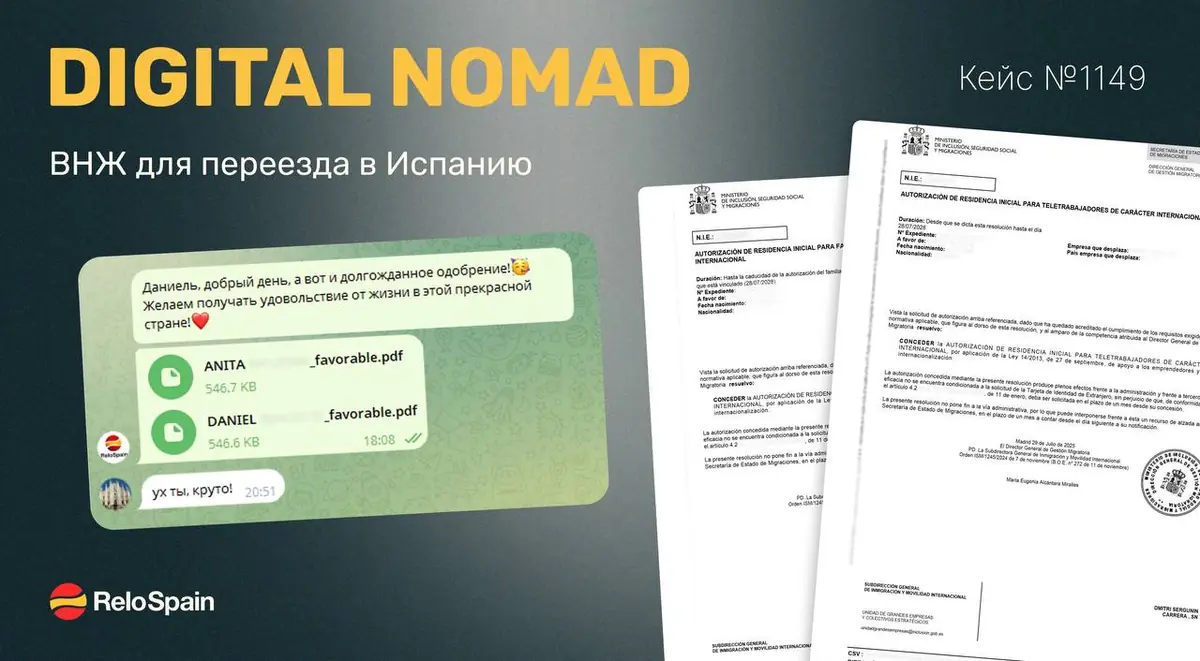
A small example: the case of Daniel. He and his wife decided to move to Barcelona. During a free consultation, we selected the Digital Nomad residence permit for employment. On June 27, we submitted the documents. On July 21, an unexpected additional request came: a full translation of the contract, although the regulations always state that key points are sufficient. We made the translation — and the next day
the case was approved. The approval process is unpredictable: either it gets approved immediately or they ask for something that was not required before.
Day 1–3: gather documents: diploma/contracts/statements/certificates. When you have a clear checklist of documents, preparing them is not difficult.
Day 4–10: we do translations, obtain apostilles. Statistically, this is approximately how much time it takes.
Day 11–14: we apply online through UGE within Spain before the visa expires. You apply for visas separately or with our help if you apply through us.
Day 15–28: during this period, you will receive a response; if there are additional requests — respond quickly, within 10 working days.
Usually, the process takes up to 40 days. However, in reality, our clients most often receive approval much faster.
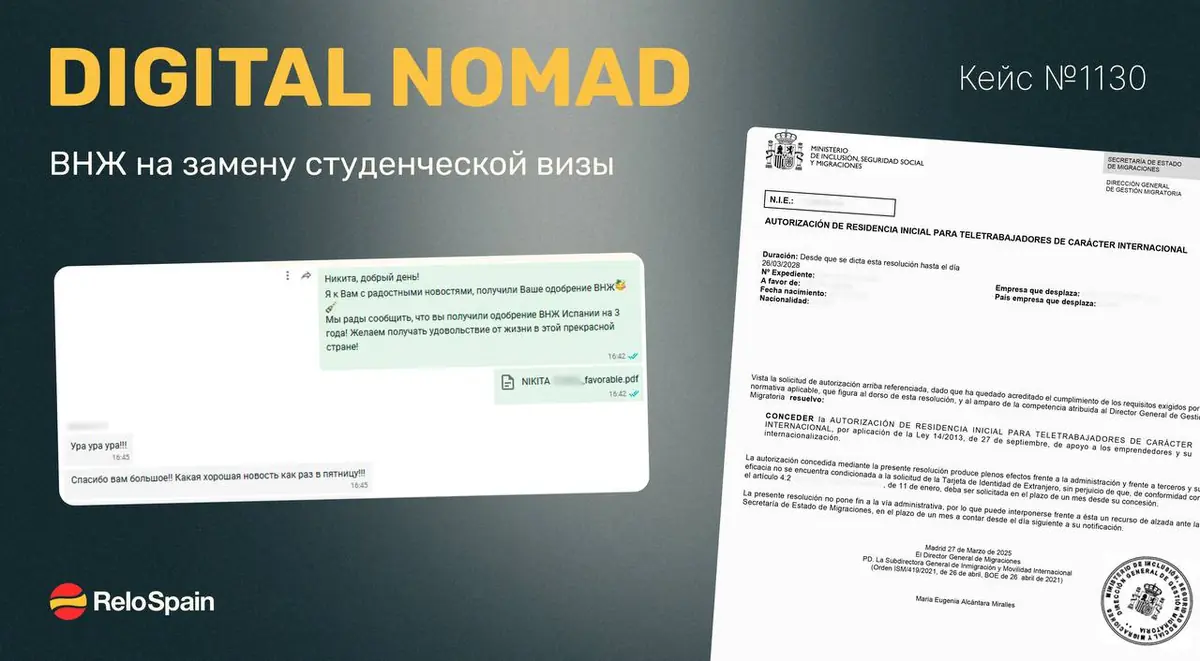
For example, Nikita: He obtained a student visa for legal status in the EU, but studying was not in his plans. We suggested the employment nomad residence permit — he agreed, and we began the turnkey processing. On March 12, we submitted the documents, and by March 27, we received approval without additional requests in just 10 working days!
So, here are the top most common reasons for refusals:
This is all about how to obtain the Digital Nomad residence permit in Spain. I hope you have received comprehensive information on this residence permit. The next step is either to learn more about how to apply personally or to explore other types of residence permits if the digital nomad visa does not suit you.
Strictly necessary
Required for the site to function
These cookies are essential for the website to work and cannot be disabled. They remember your language preference and your cookie decision so the banner doesn’t reappear
Analytics & performance
Anonymous visit counting
Let us count visits and traffic sources (search, social, direct) to understand page popularity and improve the site. No personal data is collected
Your rights
You can change or withdraw your consent at any time by clicking «Manage cookies» in the site footer. This is as easy as giving consent. You also have the right to access, correct, or delete your data by contacting us at hello@relospain.com