Schools, adaptation, documents, and family scenarios that need to be considered before relocation.
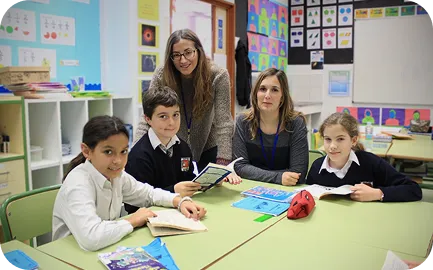
If you are planning to move to Spain with children, then you definitely need to be ready to figure this out: how to enroll your child in school or kindergarten? What documents should you prepare in advance? And when should you apply to the school or university to ensure acceptance? In this article, we will answer all your questions in detail and explain what needs to be done so that your children feel comfortable in Spain.
How is the education system in Spain structured, why is it one of the best in Europe, and what are its differences from the Russian system? The education structure in Spain is divided into levels.
The first level is Educación Infantil, education for children up to 6 years old. It is divided into two stages: a preparatory stage for children under 3 years old — it is paid and not mandatory. And the equivalent of kindergarten for children aged 3 to 6 years. Next is primary school, Educación Primaria. This is mandatory free education for children aged 6 to 12 years. Yes, in Spain, children start school at 6 years old, not 7. In international schools with British or French education systems, a child may start school as early as 5 years old.
Then comes Secondary School (Educación Secundaria Obligatoria) — this is mandatory education for children aged 12 to 16 years. At the end, students receive a certificate called Graduado en ESO, which is equivalent to a diploma in Russia. After 16, they can either start working or go through the Bachillerato stage — a two-year education for high school students planning to enter university, similar to the familiar colleges in Russia, with 1-2 years of study. Here, students choose a specialization: science and technology, humanities and social sciences, or arts. At the end, they take exams.
Higher education in Spain follows the familiar Bologna system:
1. Bachelor's Degree (Grado / Bachelor's Degree). These are the first 4 years of study at a university, although medicine and architecture require 5-6 years.
2. Master's Degree, lasting 1-2 years.
3. Doctorate, 3-4 years.
At first glance, it may seem that the education systems in Russia and Spain are similar, but this is not the case. It is more accurate to compare what a child receives upon graduating from school: and there is not much difference here, as in reality both children who studied in different systems have equal chances of entering university. Spain has a completely different approach to children, a different teaching methodology, and there is not as much emphasis on academic knowledge as in Russia. First graders are not required to be able to read or write immediately. After moving to Spain, a lot of attention is paid to the adaptation of such students: the comfort of the child in society, communication with teachers, completing assignments, and interacting with other children. If a child feels uncomfortable at school, their studies will be difficult, regardless of their abilities.
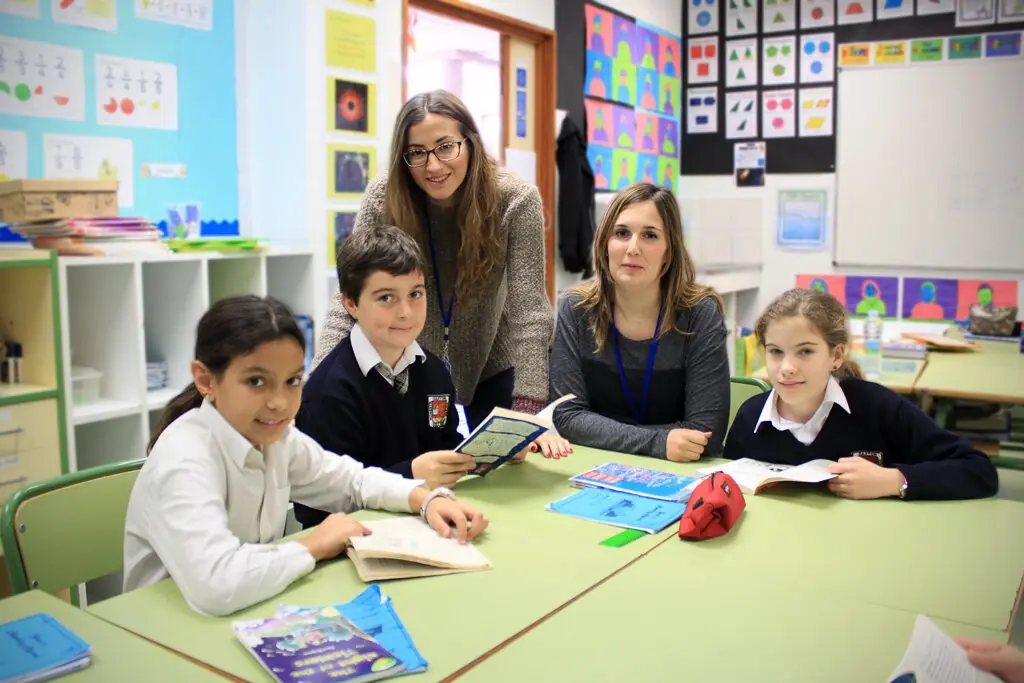
When teachers see that a child is struggling to integrate into the group, is having difficulty grasping the material, or is often distracted — they arrange meetings with parents. Spanish schools may also hold special events that help with adaptation. For example, they organize "cultural evenings." There, children can dance, sing national songs, and read literature. However, such activities are not held in all schools in Spain, so don't worry too much about cultural education. It is not mandatory.
You can also obtain a Russian diploma after moving to Spain. To do this, you need to be enrolled in a Russian school and study remotely, and later take exams. The Russian education system is stricter in a good sense, with a lot of homework, frequent tests, and a classic grading system from 2 to 5. In Spain, grades are given on a scale from 1 to 10, with more emphasis on project work, creativity, and freedom of subject choice.
Another important difference in the Spanish education system is the clubs and extracurricular activities. In Spain, children have many more opportunities to engage in sports, music, arts, dance, and other activities at schools or municipal centers — the fees are minimal, but depend on the city or district. And yes, finding such clubs or activities, if they are not available at school, is easy: there are many different groups on Facebook for families who have moved from the CIS countries to Spain and have been living here for a long time.
A lot of attention is paid to football in Spain — ideal conditions have been created for playing. There are many more football fields than in Russia, a lot of them are outdoors, with constant competitions and games. This is thanks not only to the enthusiasm of the locals but also to the country's mild climate. We have a cool case on this topic.
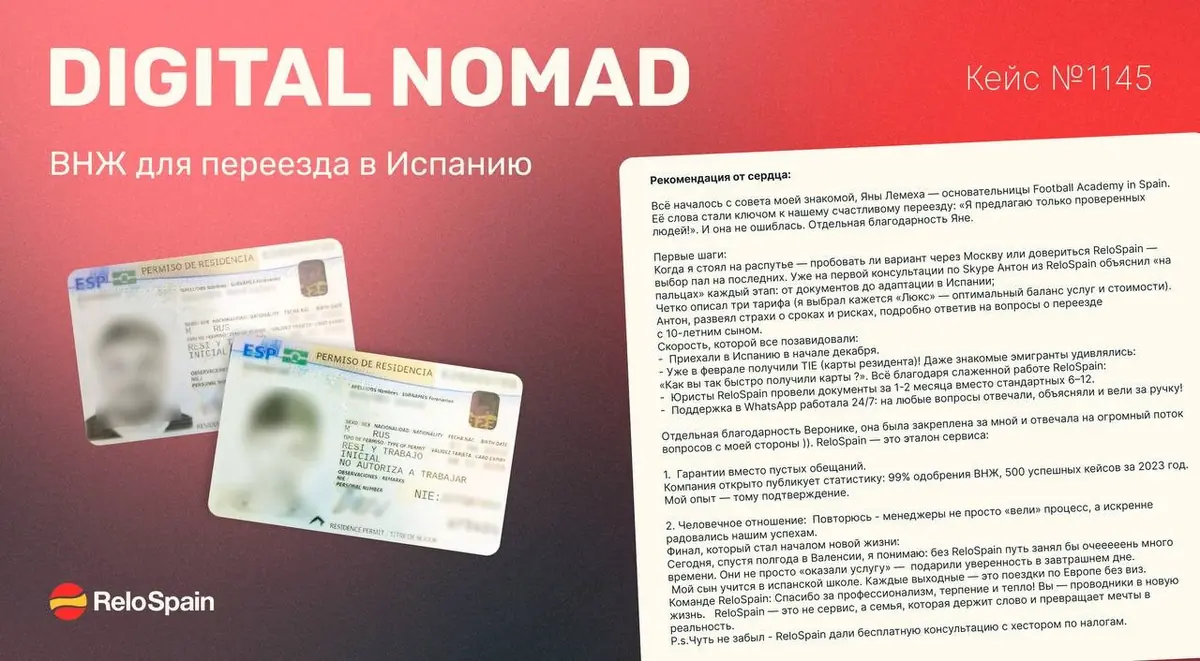
Once, Rostislav reached out to us. His son played football professionally and dreamed of playing for "Real" — his favorite team. And we were ready to make his dream come true: we connected them with the football academy "AwesomeSports" – our partner that helps any child build a professional sports career. Our team took care of the residency permit in Spain for legalizing their stay in the country. Rostislav was a freelance lawyer in a construction company, so he could work from anywhere in the world. We offered him to apply for a Digital Nomad residency permit.
On December 13 — we submitted the documents; and after 15 working days, the family received a Christmas gift — approval for the residency permit! Six months later, we checked in with Rostislav to see how they were doing, and he told us that the move to Spain was successful, his son is already studying in school while balancing training at the football academy. And every weekend, they travel around Europe without visas. Here are some comments about working with our team from Rostislav himself:
If you also want a better future for your child, contact us. We not only help with obtaining residency permits but also with adaptation in Spain: we can help you find clubs, advise you on how to enroll in school, where to look for the Russian-speaking community in Spain, and much more. If you need help relocating to Spain with your whole family, visit our website (link at the end of the article), fill out the form: during the consultation, our experts will explain the entire relocation process to Spain and help you choose a residency permit with the highest chance of approval. You can sign up using the button below.
The list may vary slightly depending on the autonomous community and type of school, but the main package is always the same.
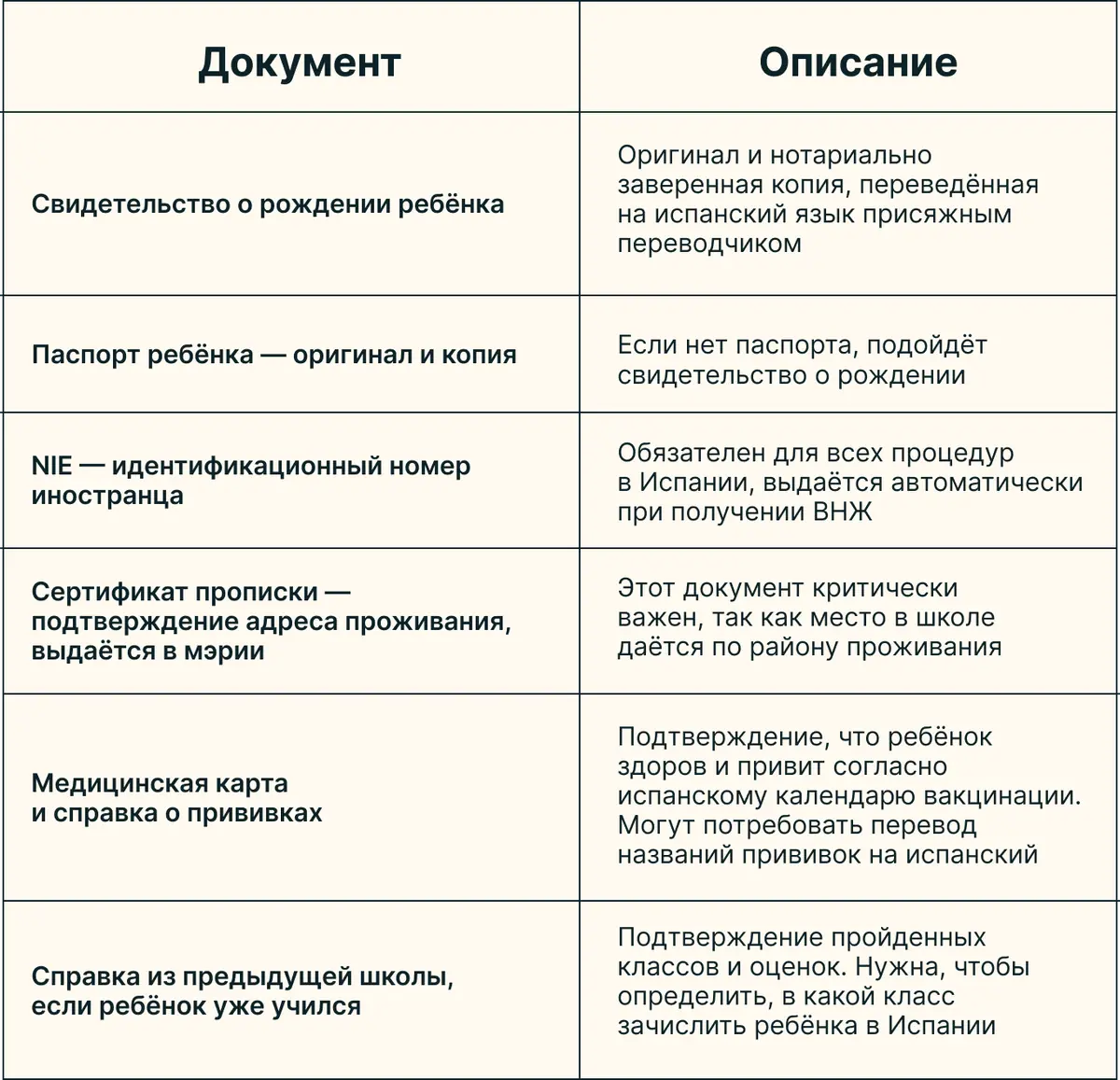
What is important to do in advance?
Before leaving, translate all key documents into Spanish by a certified translator and have them apostilled. This will save a lot of time and nerves upon arrival. Also, decide in advance on the type of school so you don't have to rush around after the move. Let's break that down now.
In the first case, the school is fully funded by the government. Except for stationery, notebooks, and textbooks. There are, of course, benefits — for example, in Catalonia, starting in 2023, there is a payment of 60 euros per child, which can be used to prepare them for school.
In public schools in Spain, there is often a more multinational environment with children from different parts of the world: there are Arabs, South Americans, Europeans, and so on. Despite this, teachers strive to create a comfortable and tolerant atmosphere. Classes are usually large — 25-30 students. This should also be taken into account when making a decision about choosing a school.
First, you need to gather all the documents. But it is especially important to register your residence — without it, you cannot enroll your child in school based on your place of residence. You can register even in a rented apartment. Then, if you have all the documents and registration, you simply submit an application online. The standard application period is from February to April, in some regions — March to May. Later, you will receive a response — whether your application has been accepted or not.
If you miss the main application deadline, you can apply for emergency placement in the summer. Then you will be able to choose from the remaining spots. Even if you moved to Spain in September or October, you may be accepted if there are available spots. You can also enroll in Spanish schools a year younger if the child does not yet know the language, for example, instead of going to 5th grade, they can go to 4th grade — this is a good option that can help the child adapt more easily to the school program.
You can choose private or international schools in Spain — these are paid educational institutions with enhanced programs, where instruction is conducted in Spanish, English, French, or German, often according to international standards. They accept both Spanish and foreign children without regard to their place of residence.
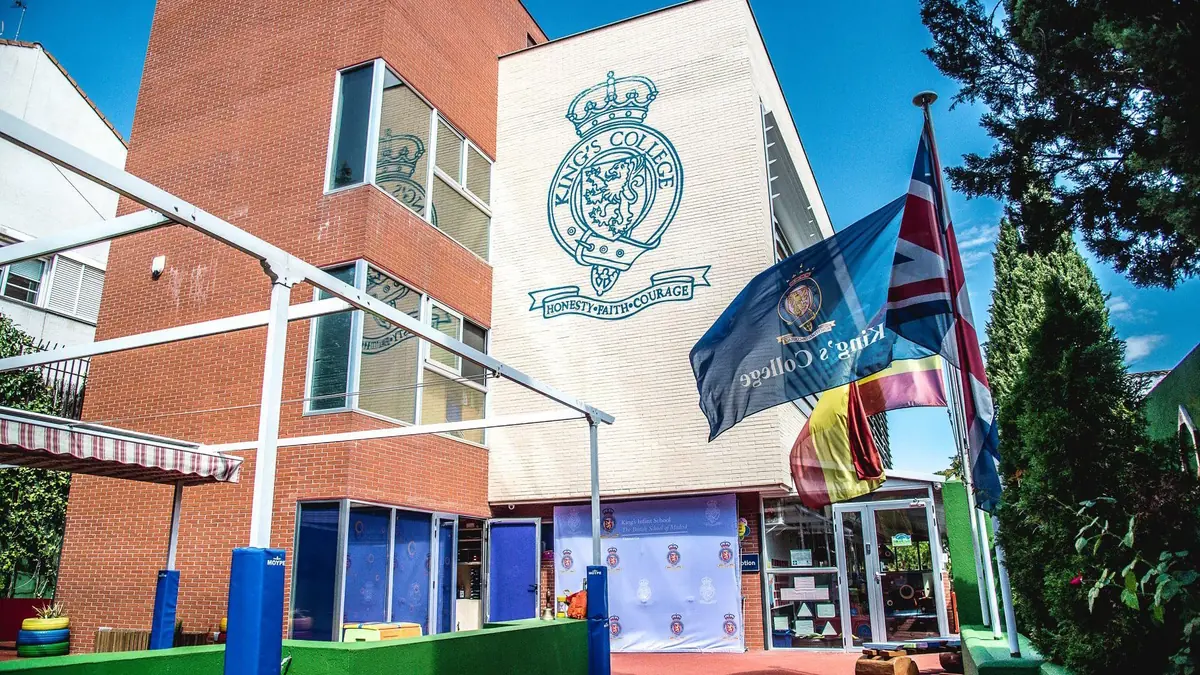
Classes in such schools are small, with 12–20 students, and there are many extracurricular opportunities: sports clubs, IT, arts, language clubs, international internships. Most teachers are native speakers, and the atmosphere is multicultural. The cost of such private education in a Spanish school ranges from 6,000 to 24,500 euros per year, plus additional expenses for meals, uniforms, transportation, books, and clubs, all depending on the region and the child's age.
Enrollment is possible throughout the year, requiring a standard set of documents and sometimes tests or interviews. This is the optimal option for families who want to focus on languages, obtain an international diploma, and integrate their child at a European level.
It is important to understand the difference between private and international schools in Spain.
Private schools in Spain may not always be accredited by the Spanish system. That is, in these institutions, you will not be able to take international exams, which limits opportunities for admission to universities outside of Spain. However, international Spanish schools can be accredited, which gives graduates the opportunity to enter universities in different countries. For example, studying at a British school in Spain opens doors to admission to universities in the UK or any other university that accepts international certificates. Exams in such schools are paid. Prices may vary, so it is important to clarify them at the chosen school.
There is another option: semi-private schools in Spain. The government partially funds them, but parents also pay for education. This is cheaper than private and international schools. The main program in these schools is the same as in public schools, but there are more innovations, better facilities, and more opportunities for language study. Classes may be free, but higher grades and additional services are paid, averaging 200–500 euros per month. Additionally, there is a separate charge for meals if the child will eat at school during the long break.
It is important to understand that the result of education in schools is not only grades and diplomas but also the formation of personality and values. Different schools may have different emphases: some focus more on knowledge, while others on personal development.
Now a bit about higher education in Spain. If you graduated from school with Spanish accreditation, you have the right to enroll in a public university based on exam scores or competition.
If a child comes to Spain with the goal of entering university, they need to translate their diploma into Spanish and adapt it to the local education system. This also needs to be taken into account. Higher education in Spain is based on the Bologna system, which is also used by universities in Russia, so there is nothing particularly special here. You gather the documents, submit an application on the educational institution's portal, and wait for a response.
Well, you have at least two options:
If the child is under 3 years old, you can use the Guarderías system — these are private or municipal centers in Spain where children develop communication and socialization skills. The equivalent of Russian nurseries. The cost varies, usually from €100 to €400 per month, and there is a subsidy system for those in need.
If the child is between 3 and 6 years old, then they go to an adaptation Spanish school. Yes, in Spain there is no term like kindergarten, and the system is somewhat different from the Russian equivalent: for example, there are no beds, but there are similar cots where children can lie down during nap time without undressing. Here, the focus is more on social adaptation, and it all depends heavily on the area.
In Spain, there is no concept of being “ready for school.” A child coming out of a Spanish “kindergarten” is, by Russian standards, not ready for studying at all. But in Spain, this is considered normal. For example, children may start learning letters only at the age of 5, because the main focus until that age is on their socialization rather than academic knowledge. To enroll a child in kindergarten, you need to submit an application to the municipality to be placed on the waiting list. Again, residency is required. The documents needed for submission are usually the same as those for schoolchildren.
Probably the most challenging aspect here is the language. It is important to understand that most Spanish schools teach in Spanish, which is logical. Therefore, a tutor is essential, and it is important that the lessons are organized in such a way that children can communicate in the same language they will be taught in school. This means that lessons with a tutor should simulate school life and role-play different situations. Because even if a child knows Spanish well and can speak it, they may not understand certain terms, which can hinder their learning. It is also important to understand that education varies in different regions. In some remote areas, schools may be of a lower standard than in the capital, both in terms of the facilities of the schools themselves and the quality of education.
Sometimes parents choose areas to live based on proximity to a specific school because they are satisfied with the quality of education in that location. Going back, it is worth noting that all Spanish education, including higher education, focuses not so much on the knowledge the child will gain, although that is certainly important, but on who they will grow up to be, what values they will live by, and what kind of person they will become. This meaning runs like a common thread through the entire school curriculum.
In Spain, all newcomers are treated equally, so you need to be prepared for the fact that everyone is considered equal here. No one divides people by nationality; everyone is loved and respected. If a child has difficulty adapting, there is a convenient solution. These are Russian-speaking schools in Spain. Usually, these are weekend schools where children can communicate in Russian. This does not replace the main school, as there is no full educational program, but it helps maintain culture. There are also Ukrainian schools.
Additionally, families with children in Spain who have residency permits have access to basic state benefits and allowances on par with residents. There is assistance for large families, starting from 3 children in one family: this includes free meals, medical assistance, and so on.
Low-income families may qualify for additional benefits, which range from 57 to 115 euros per month depending on the region and conditions. In Barcelona, if you have a residence permit, you can purchase a transport pass for only 4.5 euros. It is available for children aged 4 to 16. If the family is large, transportation can be used for free. There are also payments for working mothers if they make contributions to social security.
There is a deadline for each application. For primary school in Spain, the deadlines are as follows: the submission of preliminary applications lasts from March 12 to March 26, and for secondary school — from March 14 to March 26. Again, it all depends on the region. For example, in Valencia, the application period for primary school starts from May 6 to May 14, and for secondary school — from May 14 to May 23. Other regions may have differences, but the general trend is that the main application period falls at the end of spring – June.
If you have moved to Spain and did not manage to change schools at the beginning of the school year, do not worry. You can enroll in a new school even a month later if there are available spots. Or you can choose a school that is a bit further from your home. By the way, if the school is far away, you either take the children yourself or can put the child on a school bus — this option is available in private, sometimes semi-private schools, but not in public schools in Spain. Another option is to study online, remotely, or skip a year to spend it on adaptation, attending evening schools.
The founder of ReloSpain moved with his family, and he and his wife had a daughter here and are currently going through the entire process of adapting their children to a new place, so all the information we provide is not from the internet, but from personal experience and the experience of our clients who have already moved to Spain and live there. We also work with football schools and other partners who help children adapt. For example, we offer a full school placement service in Spain. We can help find a suitable school, gather all the necessary documents for enrollment, arrange residency, and much more.
In our work, the main thing is a comprehensive approach: not only document processing but also resolving issues with residency, banks, and registration in various institutions, housing rental. And if you need Russian-speaking communities or Russian doctors, we are happy to share contacts with you. All details can be discussed in a free consultation with our experts. They will thoroughly analyze your case, select a residency option with the highest chance of approval, and create a roadmap. You can submit an application at the end of the article.
You can create a complete roadmap for obtaining residency during the consultation by clicking the button below
Strictly necessary
Required for the site to function
These cookies are essential for the website to work and cannot be disabled. They remember your language preference and your cookie decision so the banner doesn’t reappear
Analytics & performance
Anonymous visit counting
Let us count visits and traffic sources (search, social, direct) to understand page popularity and improve the site. No personal data is collected
Your rights
You can change or withdraw your consent at any time by clicking «Manage cookies» in the site footer. This is as easy as giving consent. You also have the right to access, correct, or delete your data by contacting us at hello@relospain.com