We compare the limitations of visas with the advantages of long-term status for those building a fallback option in Europe.
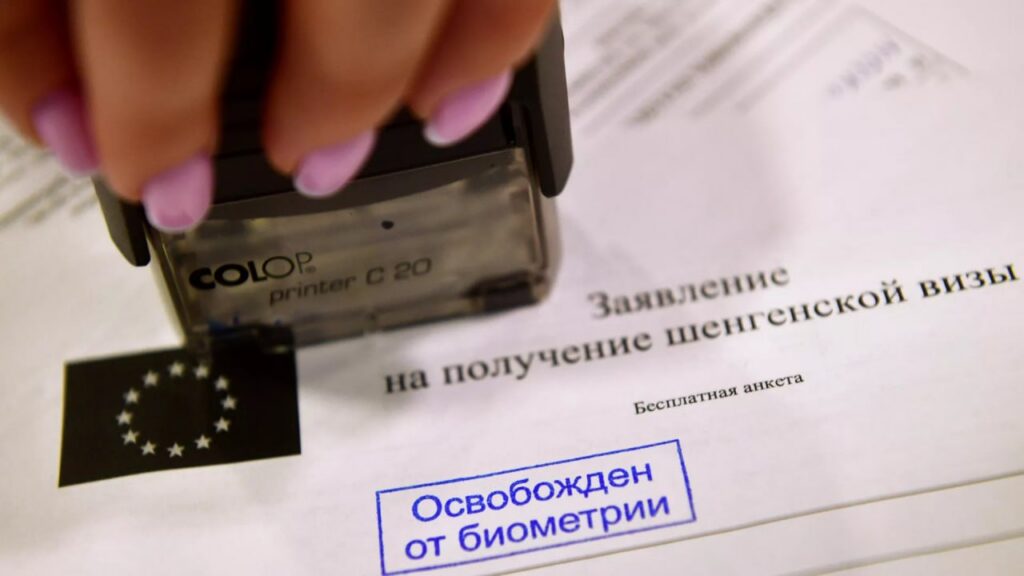
We break down why Spanish residency is a universal tool and the best option to replace Schengen visas, which have lately been causing problems.
What's happening with visas right now?
Lately more and more clients have been coming to us who arrange Spanish residency not in order to move to Spain and live, work and run a business, but to open up access to the EU, since for some reason a visa is either unavailable to them or takes more time than getting a residence permit approved. Russians can currently arrange a Schengen visa, but doing so has now become noticeably harder: fewer countries issue tourist visas, single-entry and short-term ones are given more often, and document checks have intensified.
For example, on 7 November 2025 the European Commission made a decision: EU countries are advised NOT to issue Russians multi-entry Schengen visas valid for several years, and to limit themselves mainly to single-entry or short-term visas.
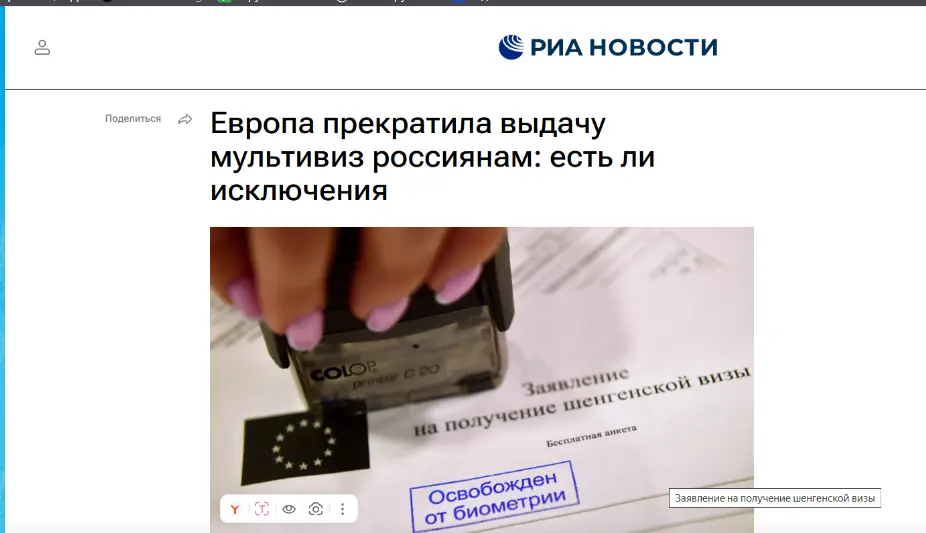
Put simply, instead of multi-entry visas, single-entry visas valid only for the dates of the trip will now be issued more and more often. And multi-entry visas themselves will be available only in exceptional humanitarian cases.
Also, we think it's no longer news to anyone that a number of countries have stopped issuing tourist visas to Russians. These are Belgium, Slovakia, Denmark, Latvia, Lithuania, the Netherlands, Poland, Finland, the Czech Republic and Estonia — these countries haven't been issuing the tourist "Schengen" to Russian citizens since 2022-2023, and at the moment these restrictions remain in place, with simply no forecast that the borders will open any time soon.
If we talk about the leading available countries — Portugal, France, Spain, Italy, Germany — they too have been affected by restrictions: documents for the Schengen are now reviewed twice as thoroughly, which has already increased visa waiting times by 1.5 times. This applies in particular to Germany: in September 2025 their embassy announced that the criteria for issuing Schengen visas to Russian citizens had been tightened because of the new EU sanctions package. Applications are now reviewed longer and more strictly, and applicants without "convincing grounds for the trip" should be prepared for a detailed check and an increased risk of refusal.
EU countries are now introducing a new border control system called EES (Entry/Exit System)
This is a single digital system for recording entry and exit for citizens of third countries who cross the external borders of the Schengen area on short-term visas or visa-free. This system collects: biometrics, passport and visa data, the time and place of entry/exit, and it also automatically counts the days of stay. After several postponements, this system began to be introduced at the EU's external borders from 12 October 2025.
It will be impossible to "overstay" a Schengen visa unnoticed: any violations of the period of stay are recorded automatically. No human factor. And at subsequent visa applications, consulates will see the history of your entries/exits and will easily be able to identify violations, which increases the risk of refusal.
A Spanish residence permit isn't necessarily about living in Spain. It's legal access to the Schengen area without visas, the ability to travel light and not depend on political changes. You don't have to live in Spain at all or become a tax resident. You can calmly stay in Russia or any other country you applied from and start travelling around the EU with a resident card — this won't affect your status in any way.
And to get it, you don't need to buy property or open a business in Spain worth millions of euros.
The answer: arrange the Digital Nomad permit. It suits remote employees, sole traders, freelancers and the self-employed. The main condition is income from outside Spain (at least 80%%). What you need:
You can obtain Spanish residency on your own or with our help — in the second case you won't have to figure out the bureaucracy and fiddle with documents — we take it all on. So if you have visa refusals, or you want to open up access to the EU for 3 years in just 20-25 working days, come to a consultation. The link is at the end of the article.
For example, it's unlimited stay in the country of residence.
With the Schengen you can stay a maximum of 90 days within a half-year across the entire Schengen area, after which you have to leave the EU. With Spanish residency you can live in the country of residence 365 days a year without restrictions, leaving and entering whenever you like. The same goes for the Schengen-area countries — you can enter and exit your chosen country throughout the term (over 3 years); you don't need to constantly renew the visa or documents.
With Spanish residency you also get a legal right to work and run a business for yourself and your family, which you can't do with the Schengen.
And also — access to social systems: free healthcare, education for children, free public schools and kindergartens, accounts at European banks and much more. And this can extend across the whole European area. For example, not long ago we had a case: we went to France, our child fell ill, and we decided to go to the hospital — and, to our surprise, we were treated for free at a public hospital in France, even though in such situations you usually have to pay.
Also, if you need to travel around the EU together with your family, Spanish residency will be the best option — you can calmly add family members at the application stage as "familiares," and in that case they'll be able to stay legally in the EU, obtain a Spanish resident document — the NIE — and use the opportunities and services on a par with you.
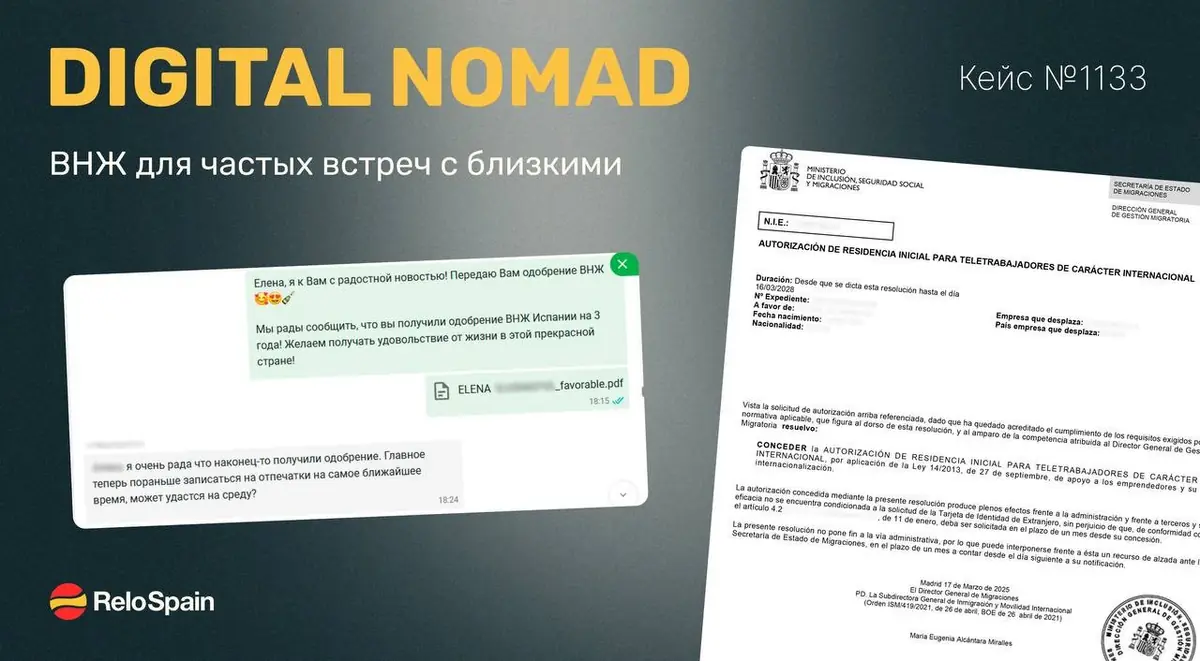
For example, Elena's case — an extremely interesting one from our practice. Elena came to us when trips to her loved ones had turned into a real quest for her. Elena was 70 at the time, a pensioner from Russia. Her son lives in Spain, her granddaughters in Switzerland. For several years she'd been flying to visit them, but each trip turned into stress: arranging visas, gathering certificates, notarised invitations — and all that for a couple of weeks with loved ones. At that age, fiddling with documents and living in anticipation is much harder. The last straw for Elena was a Schengen visa issued for just 30 days — when previously she'd had a multi-entry visa for several months! She considered this a total injustice.
Elena had long thought about Spanish residency, had been to paid consultations with other companies, and everywhere she was offered a family-reunification option — with expensive conditions and the need to live in Spain. The situation changed when her son suggested turning to us, at ReloSpain. At a free consultation we recommended the employed Digital Nomad permit — an ideal option for those who travel to Europe often and are tired of depending on the Schengen. It was important for Elena to find specialists who could answer her questions, put together a roadmap for obtaining residency and take all the arranging work on themselves.
✅ And so it happened. At the consultation she became convinced of our expertise, chose the "Premium" plan, and we set about arranging the permit end-to-end — all that was required from Elena was her passport. The result: 18 working days and the residency was approved! 🎉 Now Elena no longer depends on visa terms and can be with her loved ones whenever she wants, rather than when they give her a Schengen.
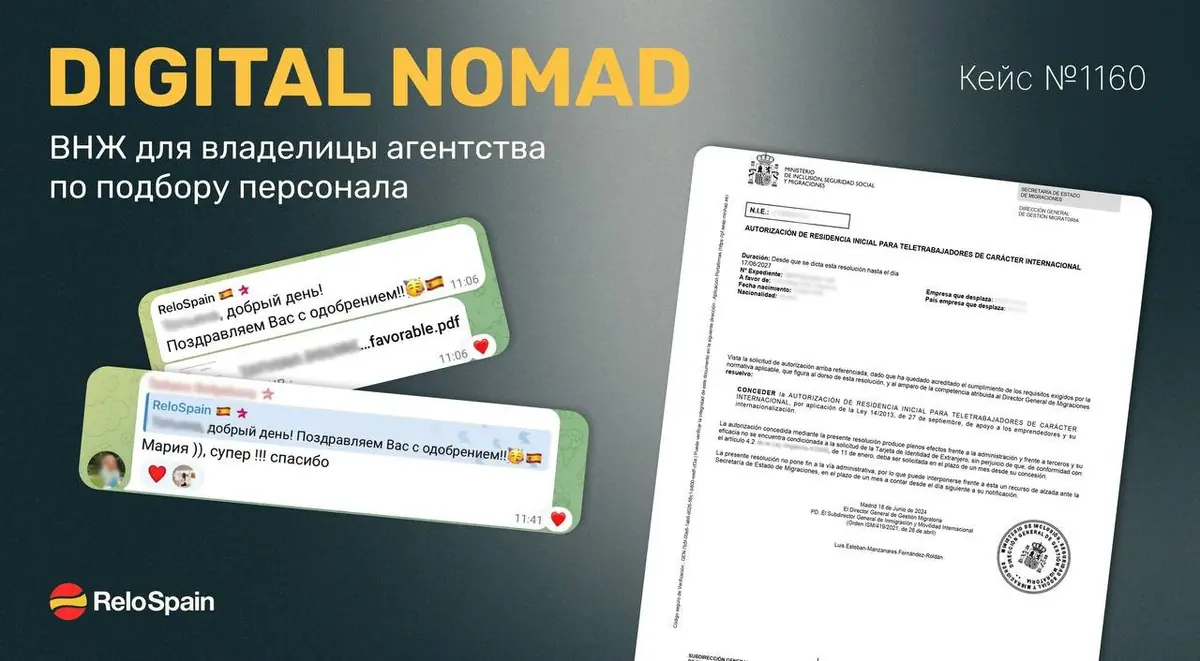
Or another case that reveals a residence permit as a universal tool: Tatyana came to us — the owner of a recruitment agency who wanted to live across 2 countries and open up access to the EU. She wasn't going to "settle" in Spain but wanted legal status in Europe in order to travel freely on business, open accounts and not depend on visas. We suggested arranging the digital nomad permit — it's exactly for such cases
The result: we got approval in 27 working days ✅
Now Tatyana continues to live between countries and advises clients all over the world, but with European status and the ability to stay in Spain longer at any moment.
So Spanish residency isn't a lifelong commitment but rather a way to live a new experience in Europe without cutting ties with your usual life. You can work, travel and live in another culture — while keeping your home, work and roots where you're comfortable. Spain doesn't require you to "drop everything" — it simply opens up one more door.
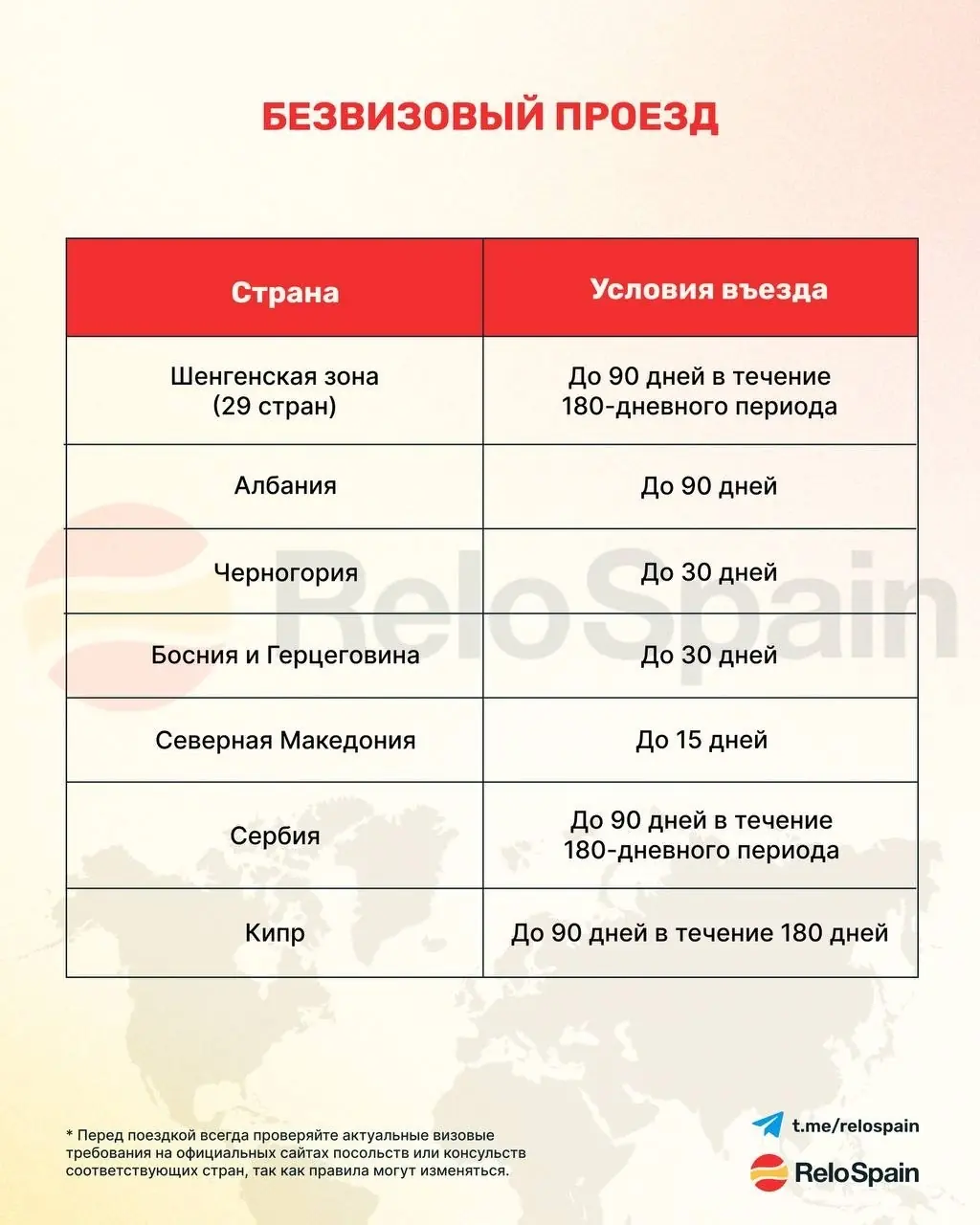
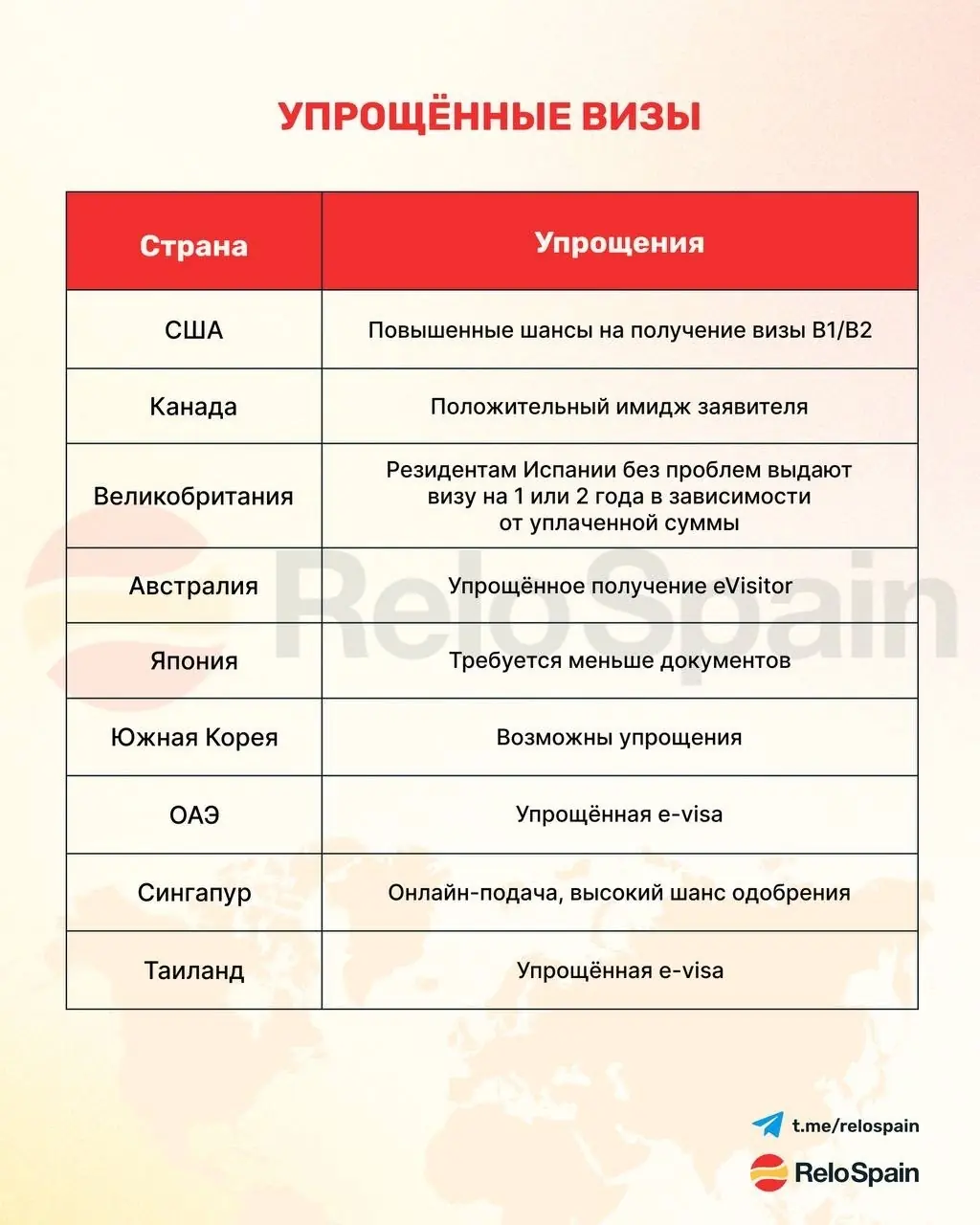
With a resident card you gain access to 29 EU countries. But let's talk about this in more detail. We've prepared two tables for you:
The first — countries you can enter on Spanish residency without a visa, with the length of stay for each:
And countries where a visa is still needed but is easier to arrange. You can download all of these tables.
So, let's sum up. What do you do if you need to get a Schengen within a month?
There are two options. The first — if you don't need Spanish residency but want to visit the EU once, for the purpose of a family trip, for example — then you can apply directly for the Schengen through us. We have contacts of trusted contractors who arrange Spanish visas for our clients — with their help you can arrange both a short-term and a long-term Schengen. The timeframe is 3-4 weeks if you apply from Russia. We can also help arrange a short-term visa as quickly as possible, even if you've had refusals — depending on your urgency.
And the second option — get Spanish residency and open up access to 29 EU countries for at least 3 years. But even with this option you'll still need to get a Schengen — without it you can't apply for the permit. However, in the case of arranging a permit, we make our clients' visas end-to-end — this is part of our full range of services.
In any case, the first thing to do is come to a consultation — we'll go over your case fully and, based on it, choose a strategy with the highest probability of approval. We work even with the most complex cases. You know where you can find the registration link — at the end of the article.
Strictly necessary
Required for the site to function
These cookies are essential for the website to work and cannot be disabled. They remember your language preference and your cookie decision so the banner doesn’t reappear
Analytics & performance
Anonymous visit counting
Let us count visits and traffic sources (search, social, direct) to understand page popularity and improve the site. No personal data is collected
Your rights
You can change or withdraw your consent at any time by clicking «Manage cookies» in the site footer. This is as easy as giving consent. You also have the right to access, correct, or delete your data by contacting us at hello@relospain.com