IRPF, residency, bank accounts, and key mistakes in planning the financial aspect of relocation.
All about taxes in Spain: IRPF, Beckham Law, self-employment, freelancer, non-resident. Current rates for 2026, tax system, optimization. Lawyer consultation.
How much does it cost to live in Spain in 2026? How much tax will you need to pay in Spain? If you plan to live in Spain for more than 183 days a year, have your center of economic interests here, and earn income — then you will definitely need to pay taxes. Today's topic is very important, so we advise you to read carefully and note key points. After all, any mistakes in finances and taxes can be costly.
For example, one incorrectly prepared document for the bank — and you lose access to your money for weeks, if not months. Did not submit one of the tax reporting forms on time — fine up to 150% of the tax amount. Missed the deadline for applying for a preferential tax regime — you overpay thousands of euros a year. Today we will break down each stage of financial life in Spain. From opening a bank account to tax planning. No fluff, with specific amounts, instructions, steps, and cases. In this article, you will find answers to the following questions:
Taxes are an important and personal topic. How much you will have to pay depends on many aspects: your income, the purpose of relocation, the presence of children or dependents, duration of stay, and more. It is also possible that you have benefits you are not aware of. They can reduce your tax burden.
In one article, we talked about the case of Sofia. She is a professional investor, and all her income is passive. To freely manage her assets without residing permanently in Spain, she obtained a Digital Nomad residency permit. But she was classified as a Nomad-autonomo — and was not warned that in this case, she needs to pay social security contributions for the renewal of her residency permit and pay taxes in Spain on all worldwide income. If Sofia had not contacted us, she would have lost thousands of euros just on taxes.
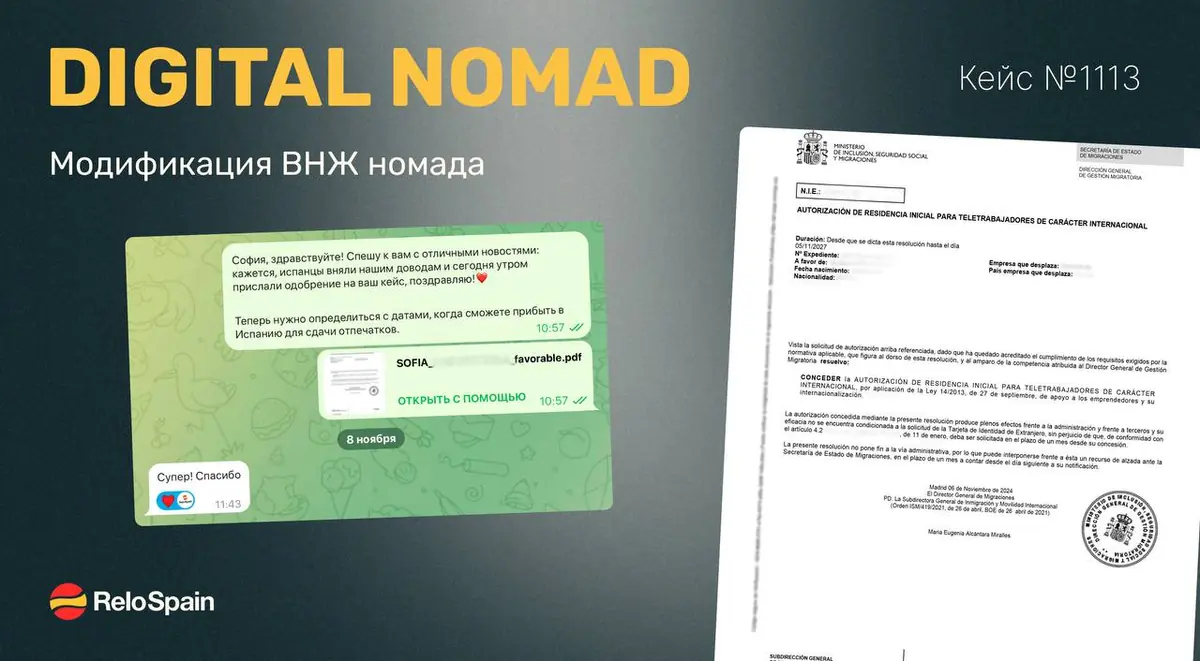
We helped her change her status to Digital Nomad in employment and arranged her under a special tax regime available only for this type of digital nomad residency permit. Now she has no expenses for maintaining her residency permit, and the tax on her worldwide passive income is zero. That’s why it’s so important to delve into this topic. Within our Knowledge Base, we do not provide any financial advice. The topic of taxes is too individual. If you need an individual tax calculation, contact our Tax Advisor — an official Spanish tax consultant.
There is a myth that in Europe you have to pay much more taxes than in Russia, but is it true? In Russia, as in Spain, a progressive scale of income tax applies:
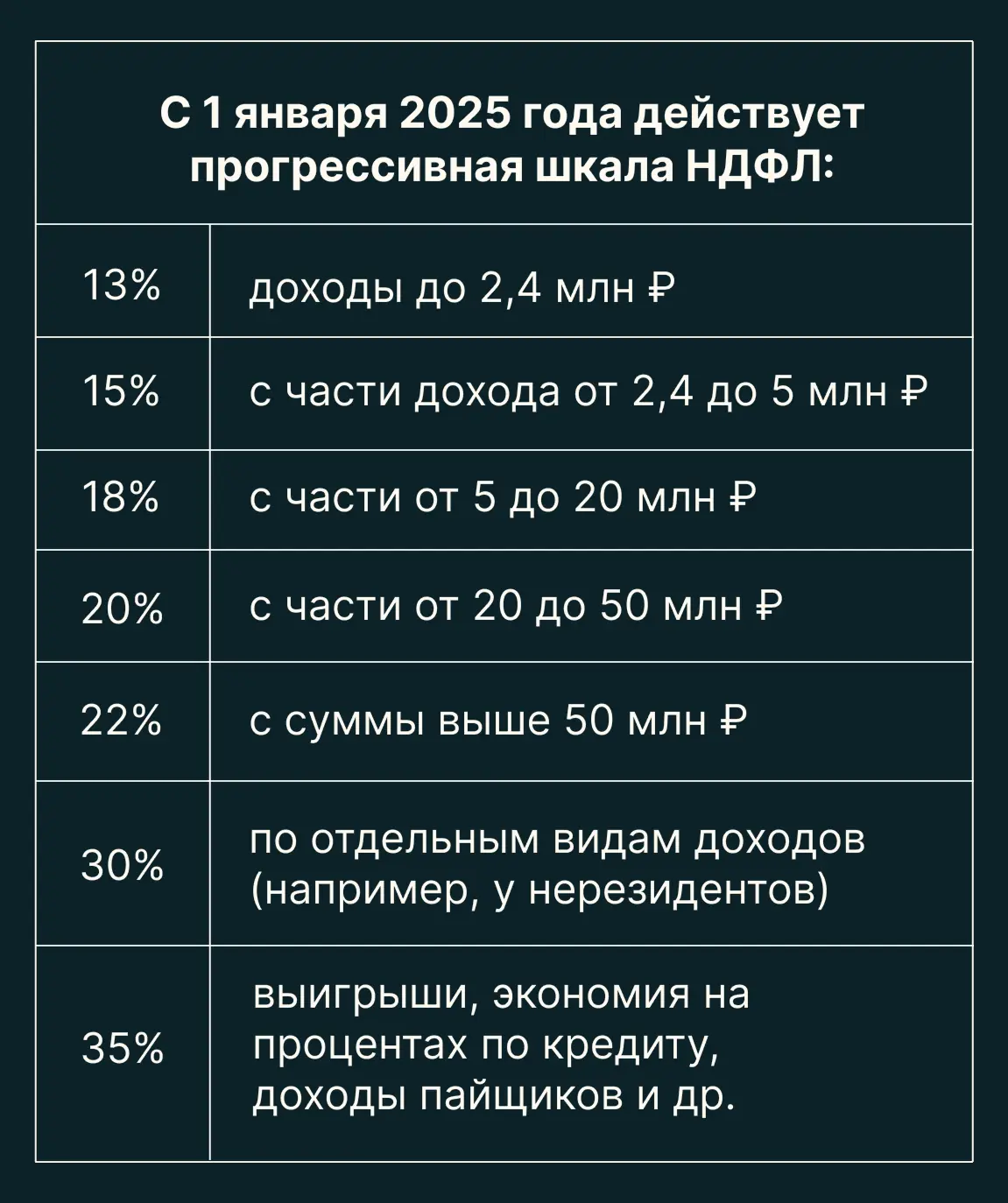
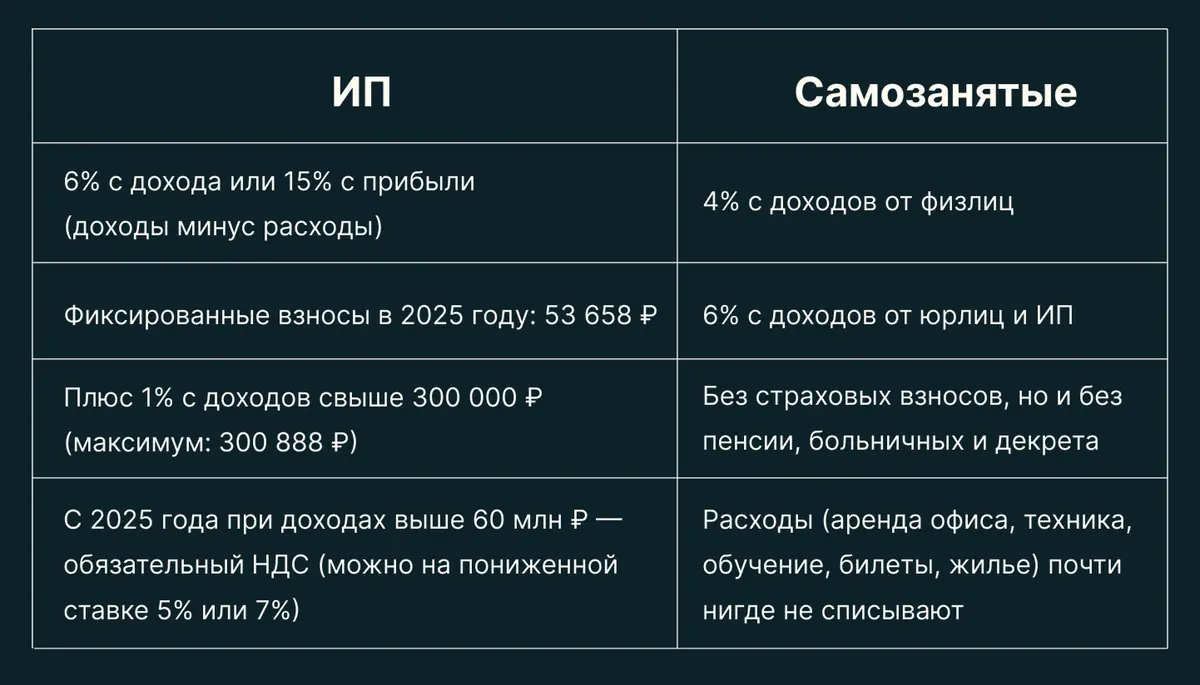
Summary on personal income tax: if you earn above average and pay everything honestly — your burden averages from 13 to 25%%. Additionally: Property tax (up to 2.5%% for cadastral value over 300 million ₽) and land tax (up to 1.5%%, depending on the region). If you are self-employed, your tax burden looks like this:
What about Spain? If you have a Digital Nomad residence permit and do not apply for a special tax regime — the Beckham Law (which we will discuss in more detail later), a progressive IRPF scale applies, which is the personal income tax in Spain.
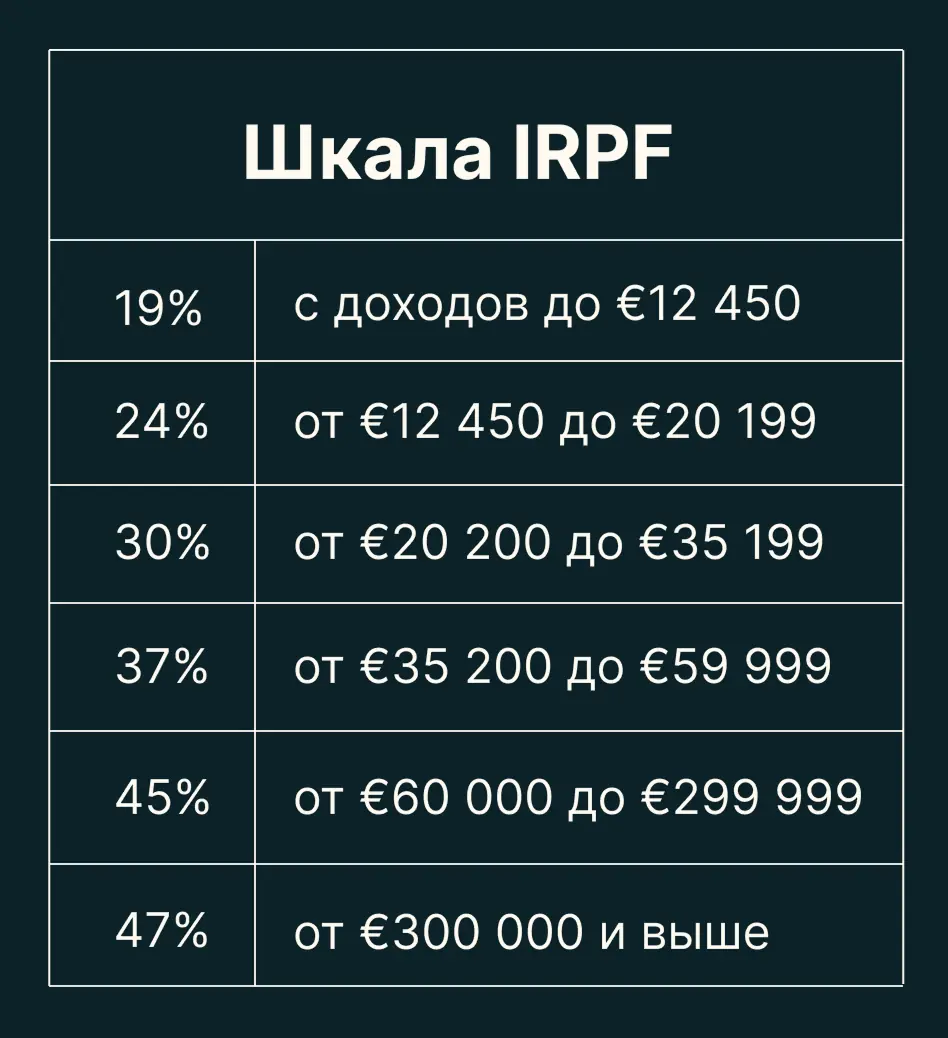
If you are Autonomo, you can deduct work-related expenses: housing rent, internet, equipment, tickets, even coffee with a client if it was 'for business'. This significantly reduces taxes. Expenses for education, subscriptions, insurance, and even the purchase of a new laptop are also considered — anything that fits your activity.
If a digital nomad registers as an autónomo, they are required to pay contributions to the Spanish social security system (Seguridad Social). In most regions, there is a benefit — it is €86 per month in the first year. If the annual income is less than €12,000, the benefit can be extended for a second year. After that, contributions will increase depending on the type of activity but remain fixed (on average €200-300 per month). Tax rates in Spain may seem higher, but after deductions and subsidies, the tax burden for freelancers and remote workers often amounts to 20% of net income.
The worst thing that can happen to you is that you will pay taxes in two different countries. What to do to avoid such double taxation? The Spanish tax system allows the use of a 'tax credit' mechanism based on bilateral agreements with other countries to avoid double taxation. It allows you to account for taxes paid in your country and pay the difference in Spain.
All of this is within the framework of the Agreement on Avoidance of Double Taxation with Russia, which currently applies to individuals — verified by our team and clients. Yes, you might say: 'But it was suspended'?! Correct, but only part of the articles on mutual tax credits for legal entities. Taxes for individuals continue to apply.
There is also a special tax regime (Beckham regime) for non-residents, which allows you not to report to Spain for any worldwide passive income. It is available for VKS, startups, and employed nomads. These are all the current ways to avoid double taxation if you are a tax resident in two countries.
In any other cases, you will be considered a tax resident of Spain and will be required to pay taxes.
This is a progressive tax scale, where you pay tax not on your entire income but according to a tiered system. For example, with an income of €35,201, you do not pay 37%% immediately, but the taxes will be divided:
As a result: instead of 37% on the entire income, you will pay about 24.8% in total. This is €4,300 less than it seemed at first glance. There are also other taxes in Spain:
IRNR is the tax on income for non-residents. Yes, this also exists — if you are not a resident, you can pay taxes, but with one condition: you are not a tax resident of Spain but receive income on its territory, including from owning real estate. Tax rates:
Non-residents are required to submit an IRNR declaration quarterly.
There is also a special tax regime in Spain: the Beckham regime. Under it, for the first 6 years, your worldwide passive income and assets are not taxed, and the income tax is fixed at a rate of 24%. Condition: the declared income must not exceed €600,000 per year. This regime is available for:
Who benefits from this regime? Mainly entrepreneurs with an income of more than €60,000 per year — with this regime, they do not have to pay Spanish taxes at a rate of 47% and tax on worldwide passive income. This regime also has its downsides:
The first downside is that the regime does not fall under most agreements on avoiding double taxation. Plus, if you have the Beckham regime and own real estate, you still need to submit a declaration as a non-resident and pay tax. It is also worth mentioning the contributions to Social Security for Autonomo — the first year is €86 per month, and then everything is calculated according to the progressive scale.
The first is the form Modelo 720 (declaration of foreign assets for tax residents of Spain). Assets outside of Spain must be declared if the total in any of the three blocks exceeds €50,000:
The declaration is submitted online through AEAT from January 1 to March 31 and reflects the status as of December 31 of the previous year. After the first submission, re-submission is only required if there is an increase in any block > €20,000 or in case of opening/closing/disposal. Cryptocurrencies are not included in Modelo 720 — a different form, Modelo 721, applies to them with the same deadline. Penalties for violations are mitigated but still apply.
Modelo 036 / 037 (declaration of census registration).
Both forms are used for registration/change/closure in the census of entrepreneurs, professionals, and tax withholders. Modelo 036 is general (applicable to all), Modelo 037 is simplified (only for individuals who are residents of Spain and meet all AEAT conditions: no representative, not a 'gran empresa', no special VAT regimes, etc.). Which one to submit is best decided with a gestor, considering your situation (type of activity, VAT regime, presence of a representative, non-resident elements of the structure, etc.).
There are also other reporting forms that are relevant in certain cases. We will not discuss them, but it is important to choose the form of activity and reporting that suits you. It is best to do this in consultation with a tax specialist.
To avoid risks, we recommend discussing all possible risks in a free meeting with our migration expert: during it, we create a personal strategy for obtaining a residence permit, taking into account expenses, documents, taxes, and the number of applicants. Click the button below to book a spot
If you made mistakes in the declaration: This will cost you from 150 to 600 euros for minor mistakes;
The fact is that any mistake in taxes can cost you a significant amount – from hundreds to several thousand euros. Therefore, we recommend consulting a tax specialist — they will provide not only an understanding of the tax situation for your type of residence permit but also a plan and step-by-step instructions on how to avoid fines while legally reducing your tax burden.
That's what our client Yegor did. He already had a residence permit and was living in Valencia under the Digital Nomad Autonomo permit. It seemed that everything was fine: he had open access to European banking and countries, he could work from Spain with clients worldwide, and he also had the right to extend.
But the problem was that the period of the preferential regime for contributions to social security for his autónomo was coming to an end, and with it — the ability to benefit from favorable tax rates in Spain. Yegor turned to us to maintain his level of tax burden. We offered him a modification of the residence permit: from Digital Nomad-Autonomo to Digital Nomad in employment, to optimize the tax burden. We assembled his case comprehensively, justifying the change of residence type.
Result: approval in 16 working days, 0 requests for additional information.
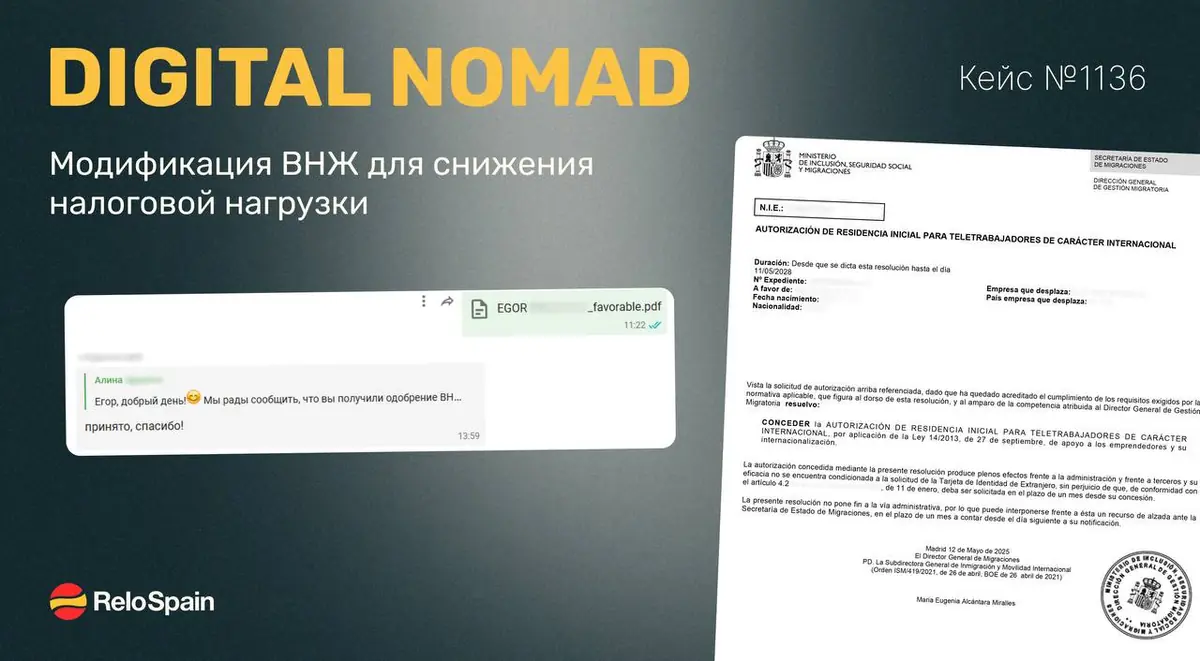
This is just one of the options to reduce your tax burden. The options for legal tax optimization in Spain can vary for everyone. So instead of guessing and searching for information online, it is better to contact a gestor directly.
So, NIF (Número de Identificación Fiscal) is the tax identification number required for all financial and legal operations in Spain, including paying taxes, signing contracts, opening a bank account, or purchasing real estate.
When a foreigner obtains a residence permit in Spain, they are automatically assigned a NIE, which is indicated on the residence card. There is no need to apply for NIE separately. A digital signature is an electronic document that verifies the user's identity in the online space. It provides access to:
Obtaining a signature is easy: you only need an NIE. The issuance of the certificate is free for everyone. The certificate must be renewed every 3 years, so it is important to keep track of its expiration date. If you have a digital signature, you can resolve many bureaucratic issues without leaving home and without waiting for an appointment.
By the way, what is an appointment? 'Sita' refers to a preliminary appointment for a visit to government institutions in Spain. Essentially, it is an electronic appointment, and it is done through a single portal for government services. You need to select the province, service, date, and time. For this, you need to enter personal data (passport, NIE) and sometimes a digital signature or certificate.
One of the advantages of a residence permit in Spain is the ability to open an account in a Spanish bank. We even have clients who obtained a residence permit specifically for this option.
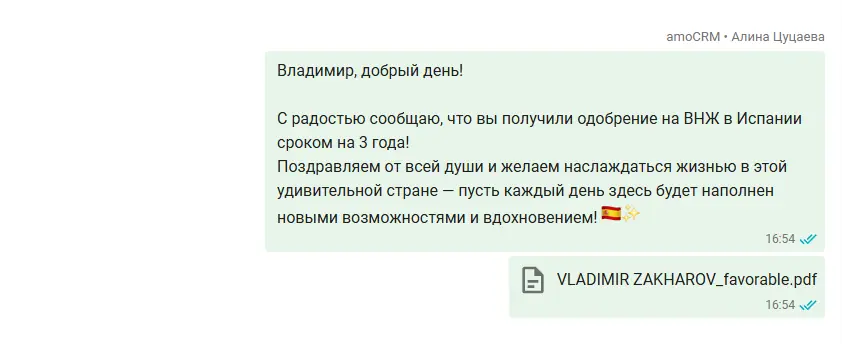
For example, Vladimir — a financier who came to us with one specific problem: his foreign accounts were blocked in 2022 when many foreign banks closed access to Russians. Moreover, the restrictions continue to this day. He needed a residence permit in Spain to gain access to his funds and travel around Europe.
We chose a Digital Nomad residence permit in employment for him, gathered the documents comprehensively, and helped confirm his monthly income with bank statements. After 27 days, he received his card and finally breathed a sigh of relief, as he regained access to his assets.
An account in a Spanish bank is much safer and more convenient than in other popular countries among relocators.
Spanish cards can be used worldwide. They make it easy to buy coffee at the airport, pay for a PlayStation game, or subscriptions to Canva, Zoom, and other services. You can even open an account for a child. For this, you will need a birth certificate translated into Spanish, a TIE card, and the child's passport.
Okay, you opened an account in a Spanish bank, but now the question is — how to transfer your assets from 'toxic' jurisdictions (for example, Russia) to this account? The scheme is simple: open an account in any bank in the CIS that is not under restrictions. Banks in Belarus, Kazakhstan, and Armenia will work. Another option is through cryptocurrency. However, you need to have a crypto wallet and a good understanding of how crypto transfers work and how to withdraw money correctly, otherwise, there is a risk of losing everything.
And the third option is to send cash to another country. Either through a trusted person or acquaintance, or through delivery services. We use all these methods when working with our clients. We will help you open a bank account, make a transfer through crypto, and legalize cash. We discuss all the nuances and internal processes of obtaining a residence permit during the consultation.
The answer is simple — you can't. Some banks may still open an account, but you will not be able to use it until the resident card of Spain is uploaded into the system. You definitely won't be able to purchase real estate or conduct serious transactions with restrictions on such an account; nor will you gain access to your frozen assets. All financial organizations are currently tightening their requirements for client verification due to global instability.
Therefore, there is only one way out: if you want to open an account in a Spanish or other European bank or broker and gain access to transfers and payments worldwide — obtain a residence permit in Spain. If you urgently need a bank account in the EU, we recommend considering the Digital Nomad residence permit. The residence application process takes less than 20 working days. Our clients typically receive approvals within 10-15 days.
If you are a freelancer applying through the Nomad Autónomo residency, then the following information is for you. Let's discuss all the ways to confirm your income. What to do if you receive payments from different clients rather than from a single employer?
But if you are a freelancer and your contracts with clients were verbal, before applying you should:
As a last resort: request recommendation letters from clients. If you do not have official documents regarding your work with clients but want to obtain residency in Spain, come to us for a free consultation. We will either find a solution for your situation, help you confirm your income, or suggest another suitable type. For example, the residency for a 'Startup' does not require any income confirmation.
Here is an example of how we help other freelancer clients obtain residency:
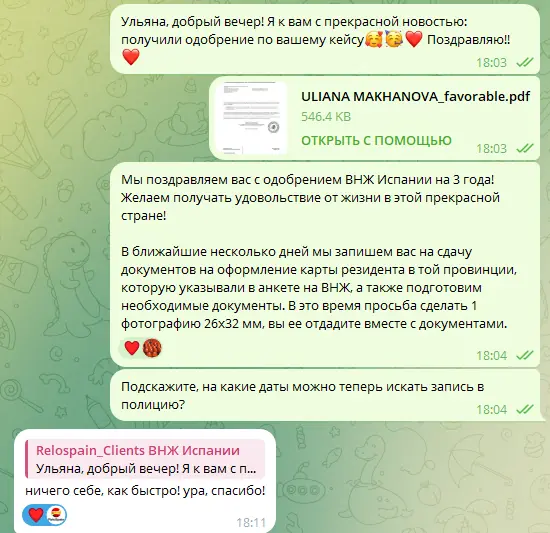
Last year, Ulyana approached us. She had a very interesting case: she lived in Armenia and worked for a British company. She really wanted to travel around Europe. However, the problem was that Ulyana was registered as a freelancer without an employment contract, which limited her entry into Europe. She already knew about the Digital Nomad residency and chose us as those who would help with the application.
For approval, the British contract was not suitable due to its format. So, here’s what we did: we restructured the contract according to the agency's requirements, synchronized the timelines in all documents from the employer, and helped justify additional income. And it worked! Ulyana received approval for the Digital Nomad residency in 14 days.
So, we have covered this complex topic together. There is a lot of information, and someone might get completely confused. Therefore, be sure to use the additional files after reading — this will help you structure everything and remember the most important points. If you plan to apply for residency in the next 6 months, the best option is to follow this plan:
Strictly necessary
Required for the site to function
These cookies are essential for the website to work and cannot be disabled. They remember your language preference and your cookie decision so the banner doesn’t reappear
Analytics & performance
Anonymous visit counting
Let us count visits and traffic sources (search, social, direct) to understand page popularity and improve the site. No personal data is collected
Your rights
You can change or withdraw your consent at any time by clicking «Manage cookies» in the site footer. This is as easy as giving consent. You also have the right to access, correct, or delete your data by contacting us at hello@relospain.com